History, By Architecture, Blog#04
Kathmandu Durbar Square
History, Architecture and Culture.
Kathmandu Durbar Square stands as one of the most vivid architectural palimpsests in South Asia, where layers of political power, religious devotion, and artisanal evolution converge. Once the royal seat of the Malla and later the Shah kings of Nepal, the square is less a single monument than a living archive of centuries of urban and architectural transformation.
Historical Evolution
The origins of Kathmandu Durbar Square trace back to the Licchavi period (circa 4th to 9th century CE), though most of the visible structures today took shape during the Malla dynasty (12th–18th centuries). The Malla rulers, particularly King Pratap Malla (r. 1641–1674), were instrumental in transforming the square into an elaborate ceremonial and administrative hub.
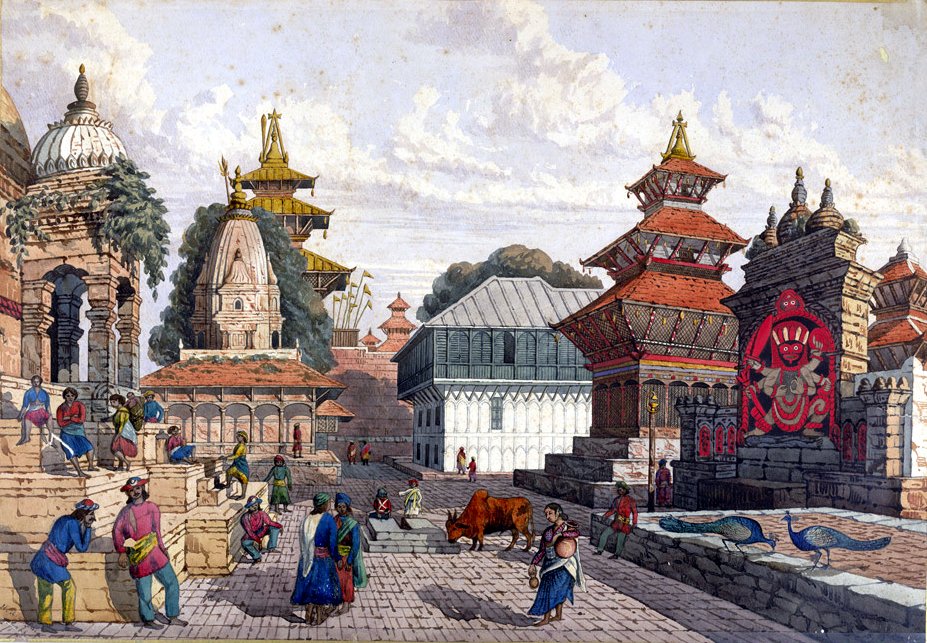
Historian Mary Shepherd Slusser, in her seminal work Nepal Mandala, notes that the Malla kings “competed not only in power but in artistic expression,” leading to an unprecedented flourishing of temple construction and civic ornamentation. This competitive patronage produced a dense urban complex where shrines, courtyards, and palaces intertwine seamlessly.
Following the unification of Nepal in 1769 by King Prithvi Narayan Shah, the square remained central to royal authority, though its political importance gradually diminished as administrative functions shifted elsewhere. However, it retained immense ceremonial and symbolic weight, especially for coronations and religious festivals.
- Licchavi foundations: early urban and धार्मिक spatial planning
- Malla period: peak artistic and architectural production
- Shah era: political continuity with reduced architectural additions
- Modern era: preservation challenges, especially after the 2015 earthquake
Architectural Composition and Urban Layout
Kathmandu Durbar Square is not a rigidly planned complex but an organically evolved urban ensemble. Its spatial organization reflects a syncretic blend of Hindu and Buddhist cosmology, with axial alignments, courtyard systems, and processional pathways interwoven into the city fabric.
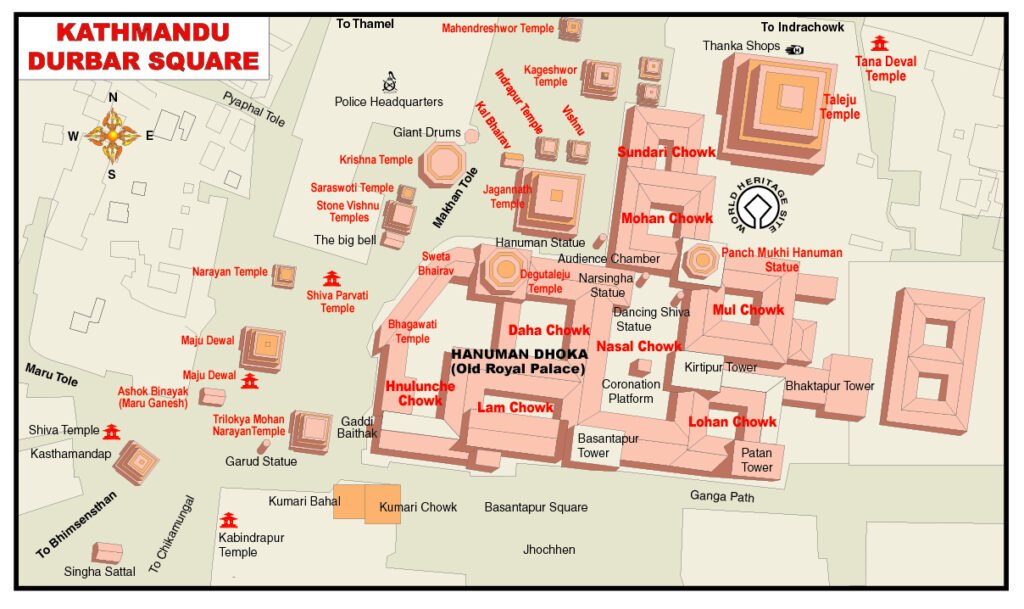
The square is anchored by the Hanuman Dhoka Palace complex, a labyrinthine structure expanded over centuries. Around it cluster temples, open platforms, and courtyards that function both ceremonially and socially.
Key Spatial Features
- Royal Palace Complex: Multi-courtyard system reflecting hierarchical access and ritual purity
- Temple Clusters: Grouped according to deity and function rather than strict symmetry
- Public Squares: खुले spaces for festivals, markets, and communal gatherings
- Raised Plinths (Jagati): Elevate sacred structures both physically and symbolically
The lack of rigid symmetry—contrary to classical Western planning—creates a dynamic, lived-in spatial quality. Architectural historian Niels Gutschow describes this as “ordered complexity,” where ritual logic governs spatial arrangement more than geometric regularity.
Kumari Ghar (House of the Living Goddess)
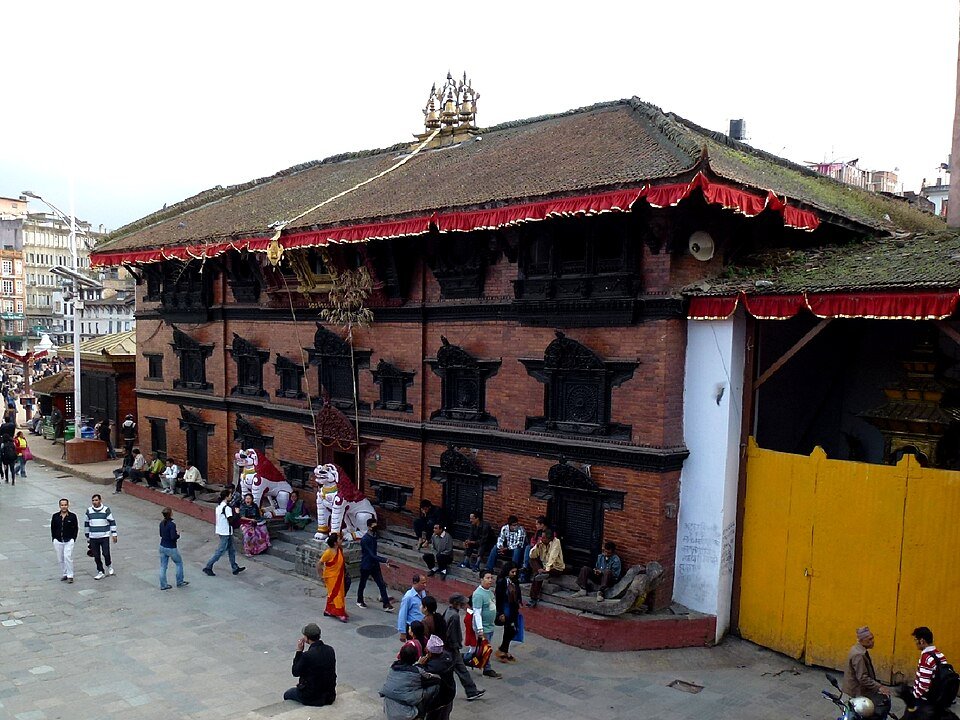
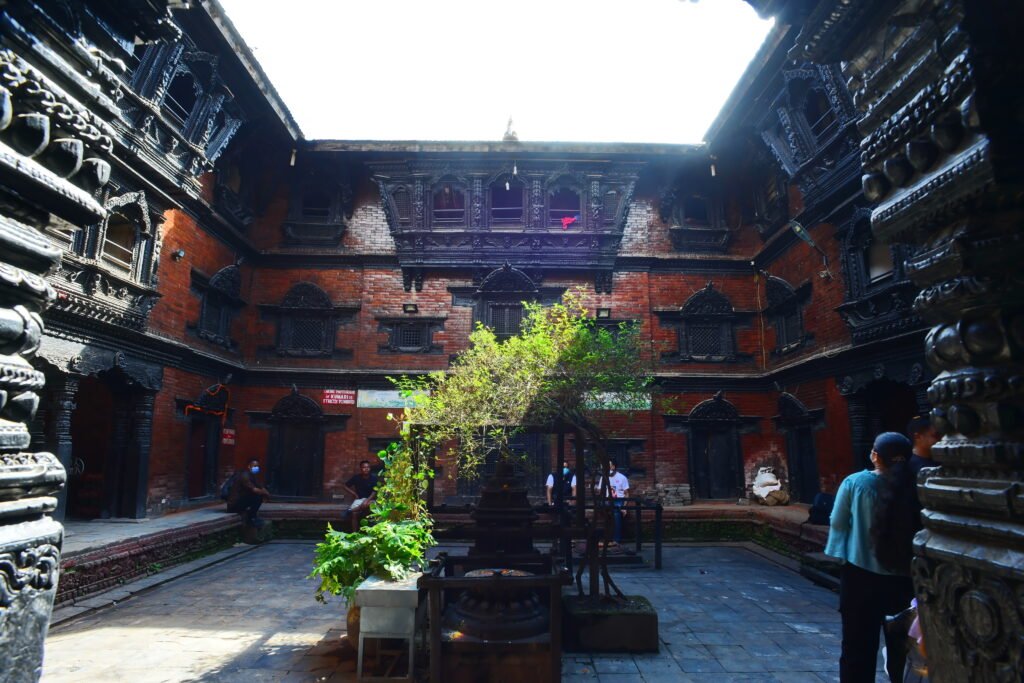
One of the most fascinating attractions in the square is the Kumari Ghar, home to the Kumari, Nepal’s living goddess. Selected from the Newar community, the Kumari is revered as the embodiment of the goddess Taleju. Visitors may catch a glimpse of her during specific times when she appears at the window. Kumari Ghar is the residence of the Living Goddess Kumari, a young girl revered as a manifestation of the goddess Taleju. The building is an architectural masterpiece with carved wooden windows and a beautifully decorated courtyard. Visitors often gather in hopes of catching a glimpse of the Kumari during her rare public appearances.
Hanuman Dhoka Palace
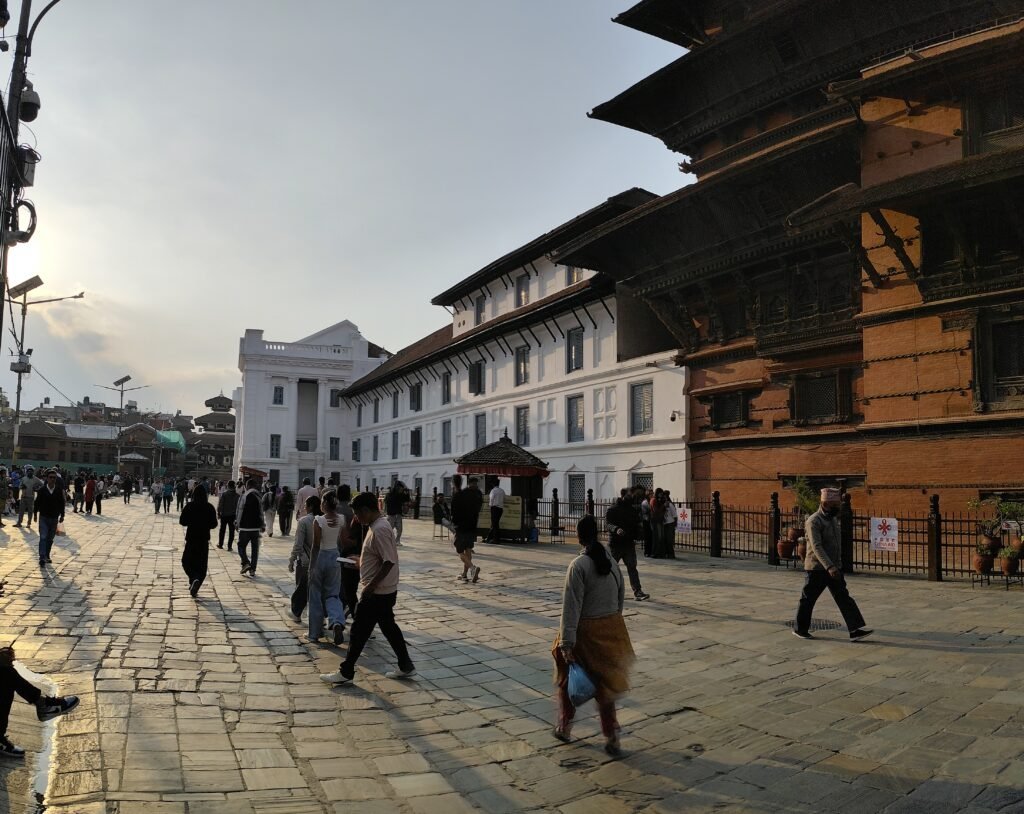
Hanuman Dhoka Palace complex is the historic royal palace that once housed the Malla and Shah kings. Named after the statue of Lord Hanuman at its entrance, this palace now serves as a museum displaying artifacts, royal memorabilia, and historical exhibits. Hanuman Dhoka Palace is the central feature of the square and served as the royal residence for centuries. Named after a statue of the monkey god Hanuman at its entrance, the palace complex consists of courtyards, halls, and museums that display historical artifacts and royal memorabilia.
Taleju Temple
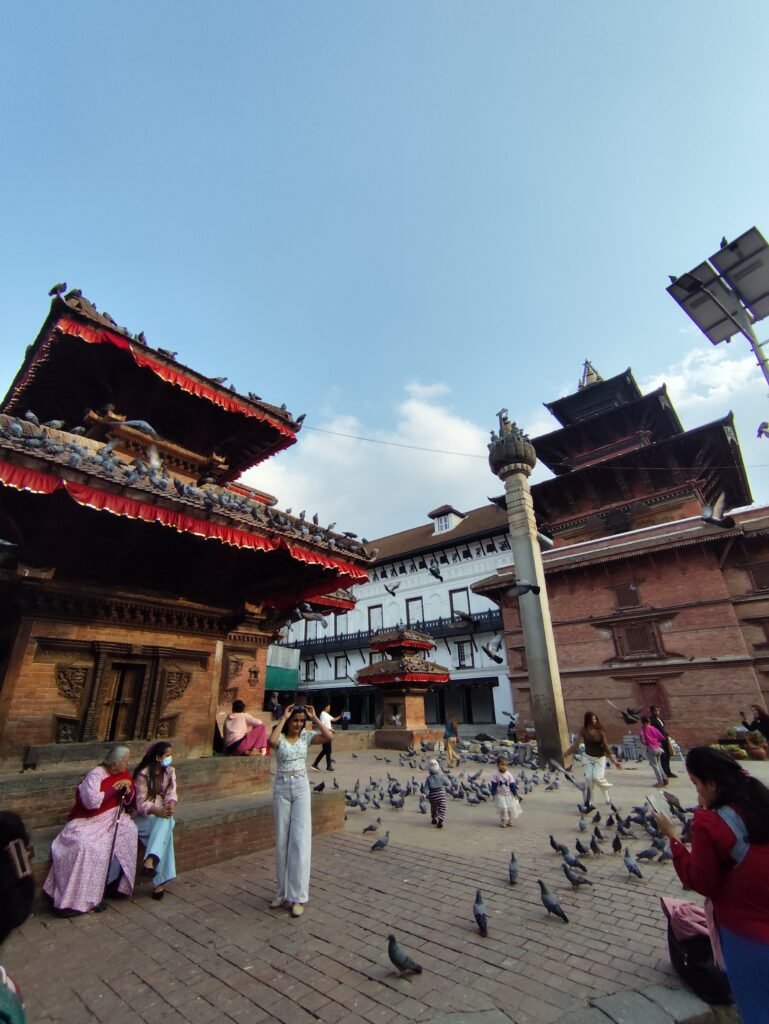
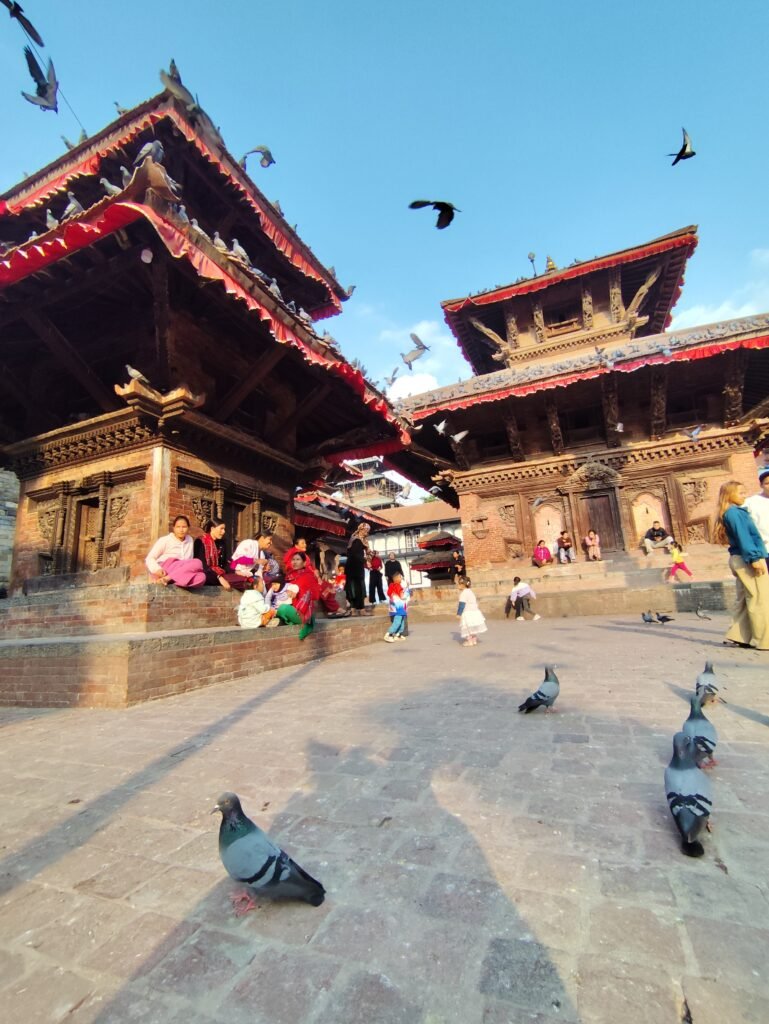
The Taleju Temple is one of the tallest and most impressive structures in the square. Dedicated to the tutelary goddess of the Malla kings, it stands on a raised platform and is opened to the public only during specific festivals. Built in the 16th century, it is dedicated to the goddess Taleju Bhawani, the tutelary deity of the Malla kings. The temple is usually closed to the public but opens during special festivals.
Kasthamandap Temple
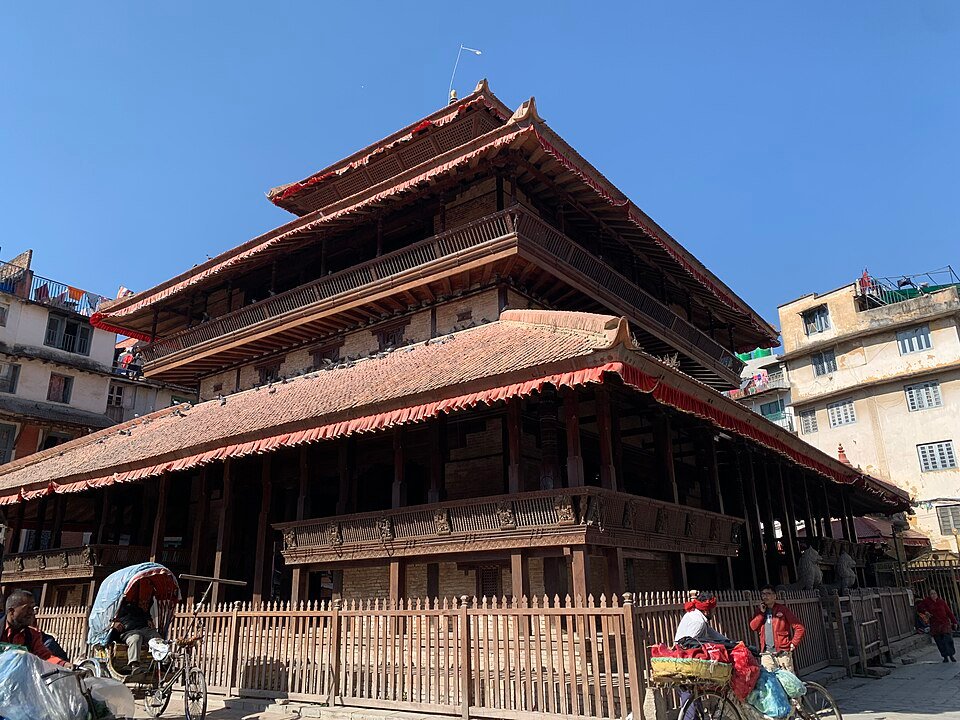
Kasthamandap, from which Kathmandu derives its name, was originally built from a single tree. Though it was destroyed in the 2015 earthquake, reconstruction efforts have brought it back as a symbol of resilience and heritage preservation.
Architectural Forms and Styles
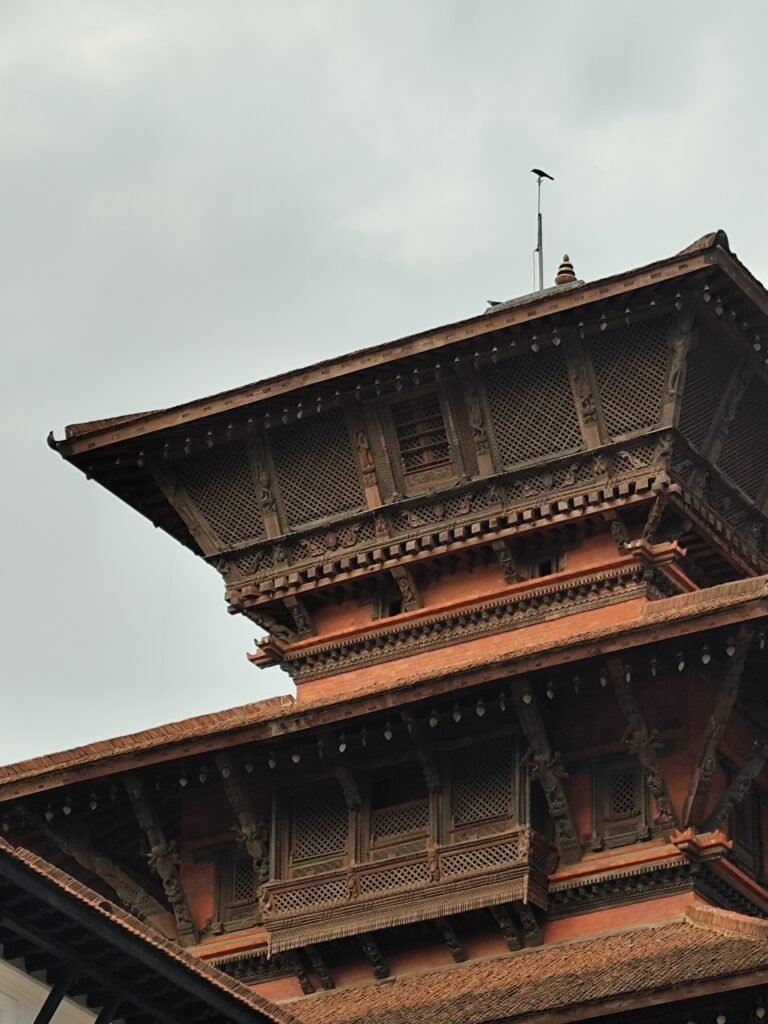
The square showcases a remarkable range of Newar architectural styles, particularly the pagoda and shikhara forms. These structures reflect centuries of technological refinement and cross-cultural exchange between the Indian subcontinent and the Himalayan region.
Pagoda Temples
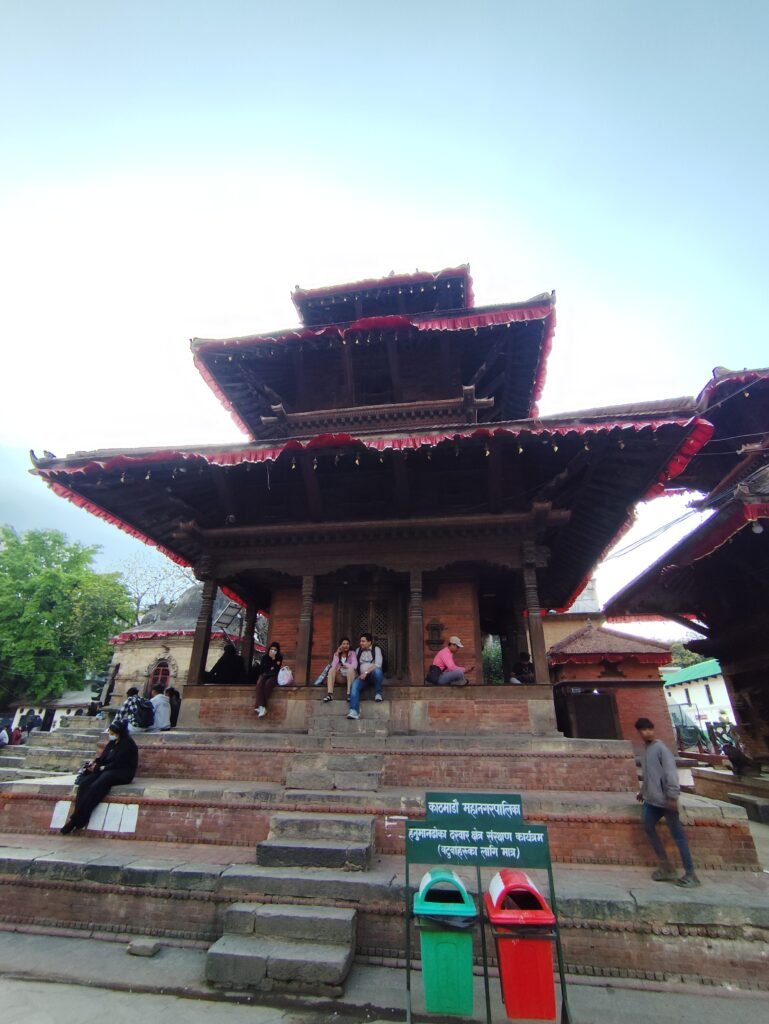
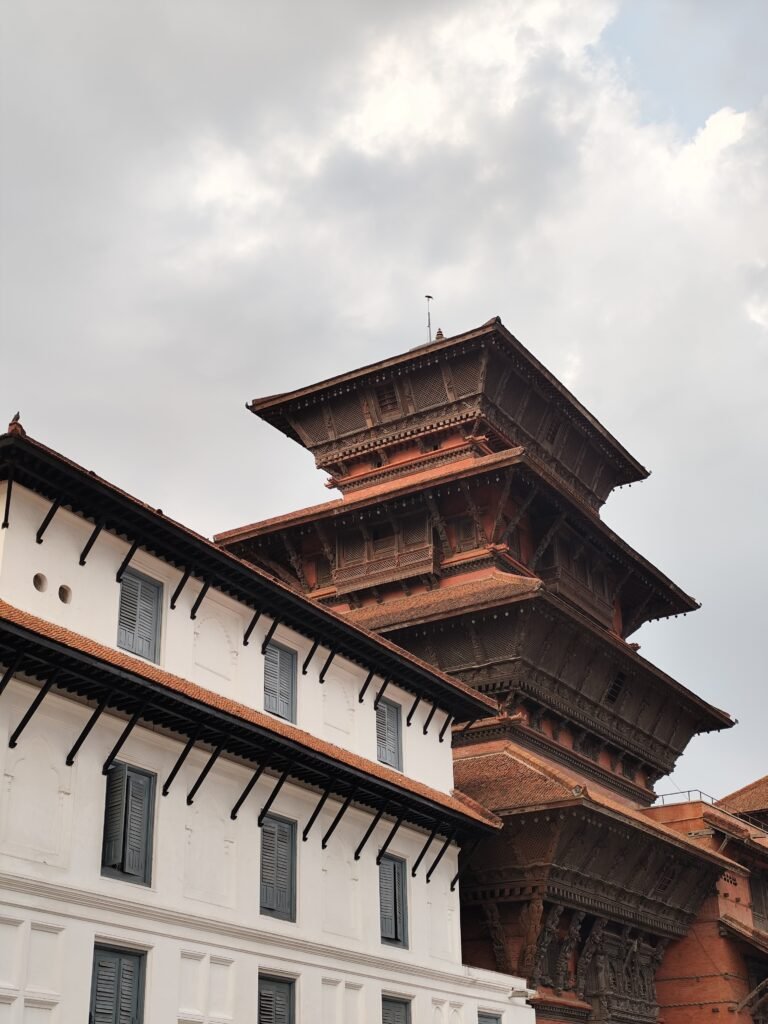
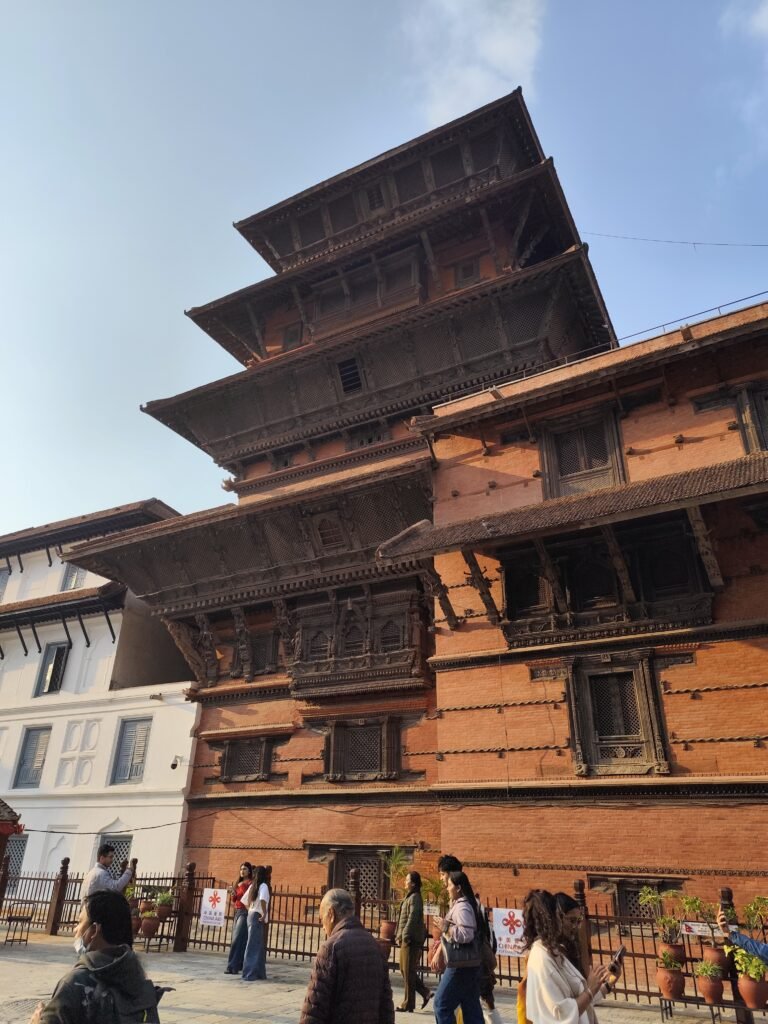
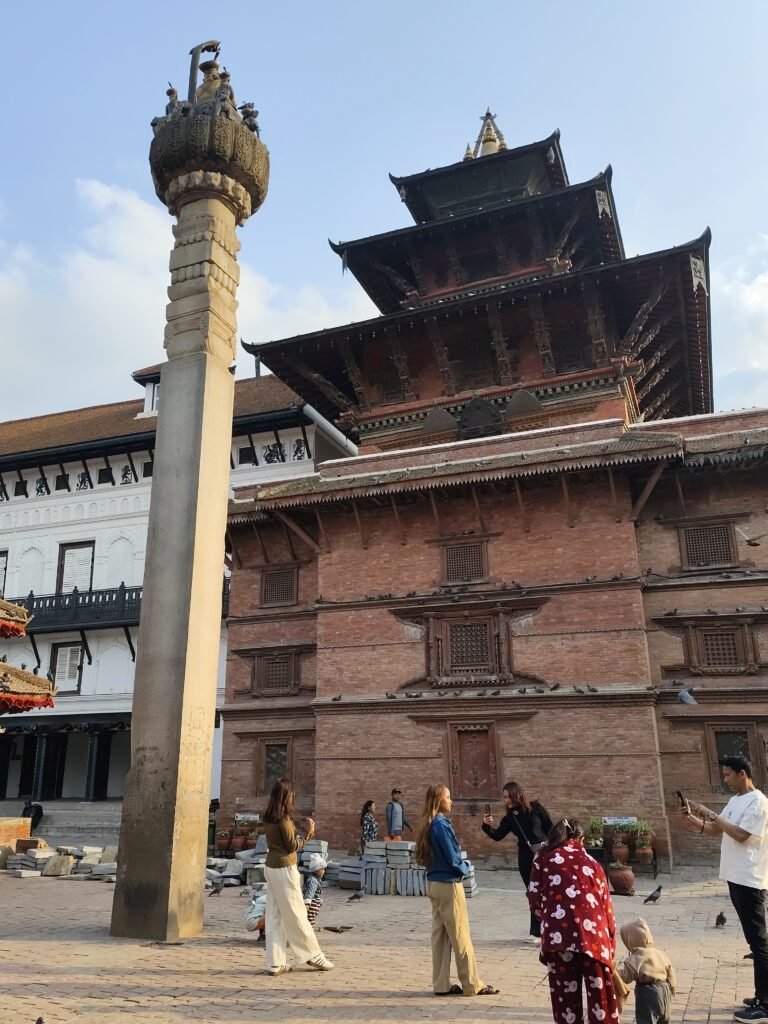
The multi-tiered pagoda is the most iconic form in the square, often attributed to the Newar architect Araniko, who carried this style to China in the 13th century. These temples feature:
- Timber frameworks with intricate joinery techniques
- Overhanging roofs supported by carved wooden struts (tundals)
- Tiered roofs symbolizing ascending spiritual realms
- Brick and mud mortar cores for seismic flexibility
The Kasthamandap, from which Kathmandu derives its name, exemplified this style before its destruction in 2015 and subsequent reconstruction using traditional methods.
Shikhara Temples
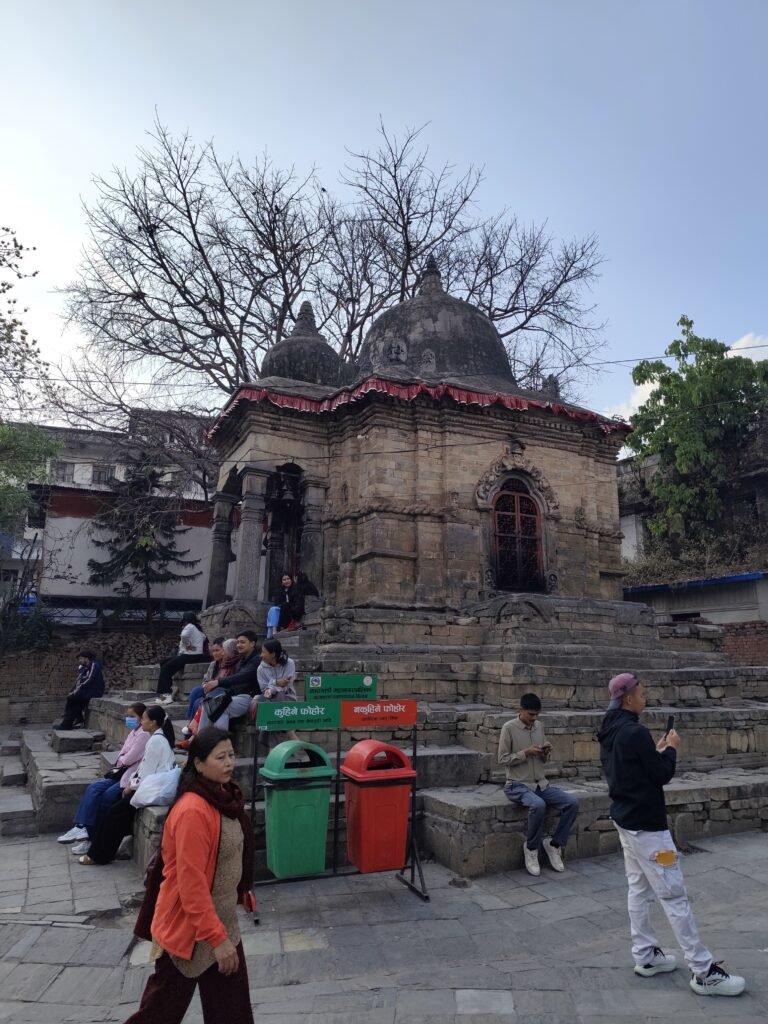
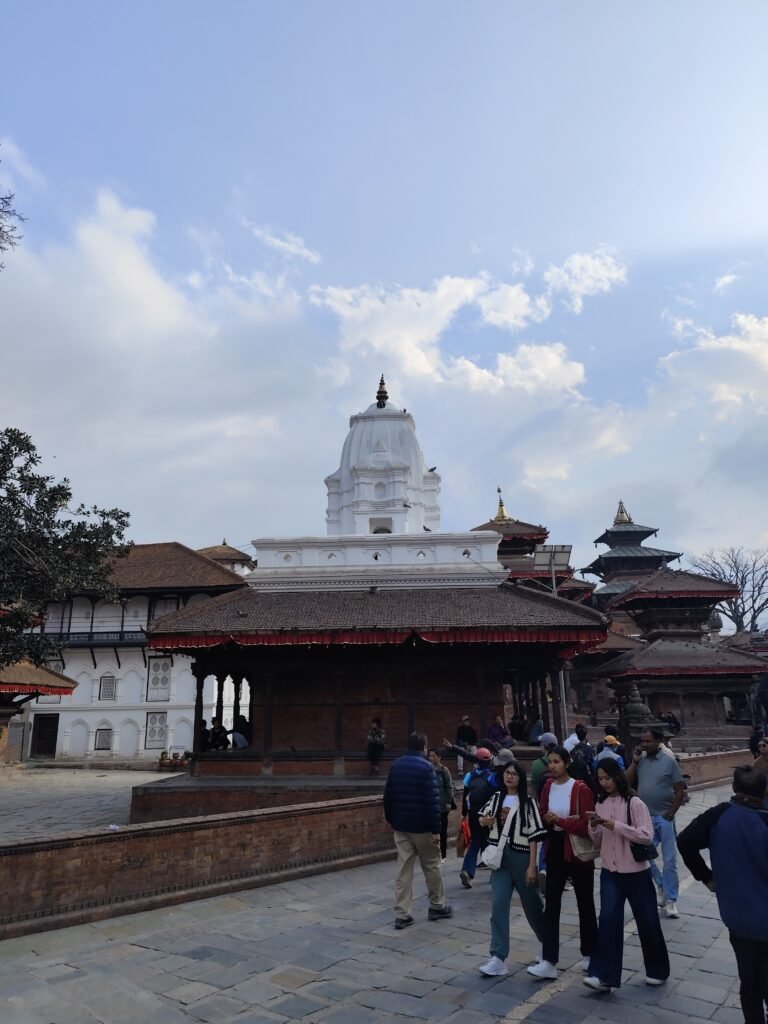
Influenced by North Indian नागर style architecture, shikhara temples like the Krishna Mandir are constructed primarily of stone and feature:
- Vertical curvilinear towers
- Load-bearing masonry with finely carved stone reliefs
- Symmetrical plans reflecting classical Hindu temple geometry
Krishna Mandir, built in 1637, stands out for its use of stone rather than brick and timber, marking a significant material and stylistic departure within the square.
Cultural and Religious Significance
Kathmandu Durbar Square is deeply intertwined with Nepalese culture and spirituality. The square serves as a focal point for numerous religious festivals, rituals, and traditional events throughout the year. Kathmandu Durbar Square is not a static monument but an सक्रिय cultural space. Major festivals such as Indra Jatra and Kumari Jatra animate the square, integrating architecture with living traditions.
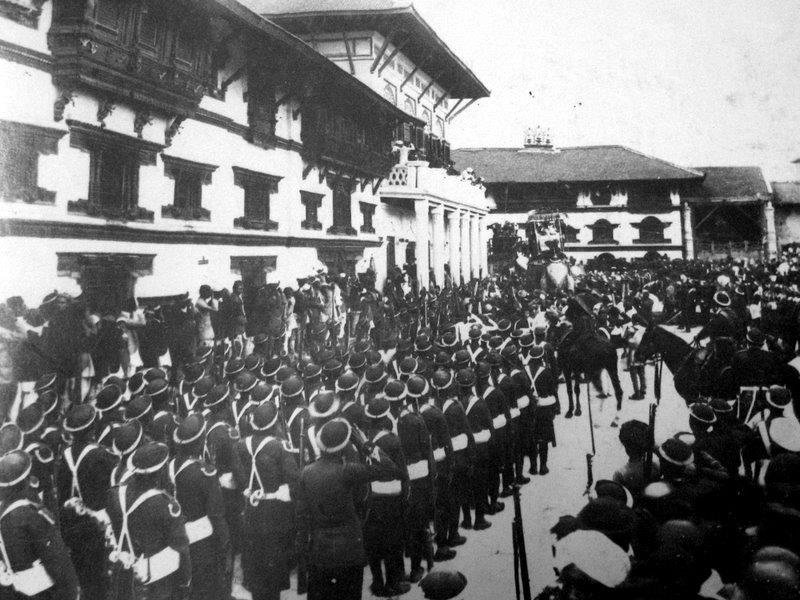
Parade before World war one in Kathamandu Durbar Square. Here, the currently non existant part and the old form of Gaddhi Baithak can be seen
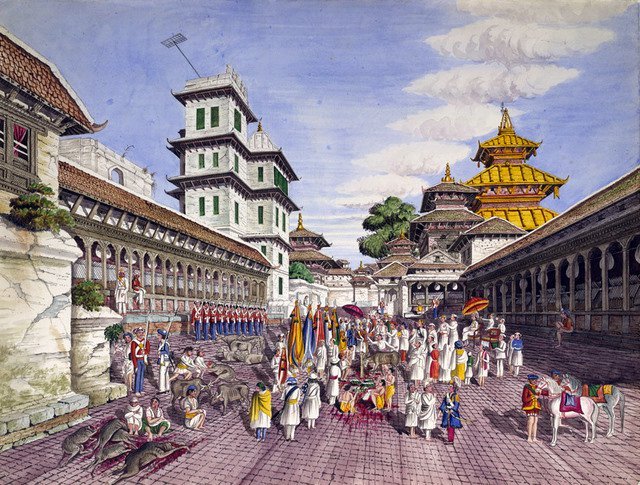
Watercolour of Kot (the military council-chamber) in the Durbar Square during Dashain showing the killing of buffalowsOldfield, Henry Ambrose 1856
Major Festivals Celebrated
The square comes alive during festivals, offering visitors a chance to witness vibrant traditions firsthand.
- Indra Jatra: A grand festival featuring masked dances, chariot processions, and the appearance of the Kumari.
- Dashain: Nepal’s largest festival, celebrating the victory of good over evil.
- Kumari Jatra: Celebrates the living goddess with ceremonial processions.
- Gai Jatra: A unique festival honoring deceased loved ones through processions and humor.
Impact of the 2015 Earthquake
The devastating earthquake in April 2015 caused significant damage to Kathmandu Durbar Square. Several temples and monuments were destroyed or severely affected. However, restoration efforts have been ongoing, reflecting a strong commitment to preserving Nepal’s cultural heritage.
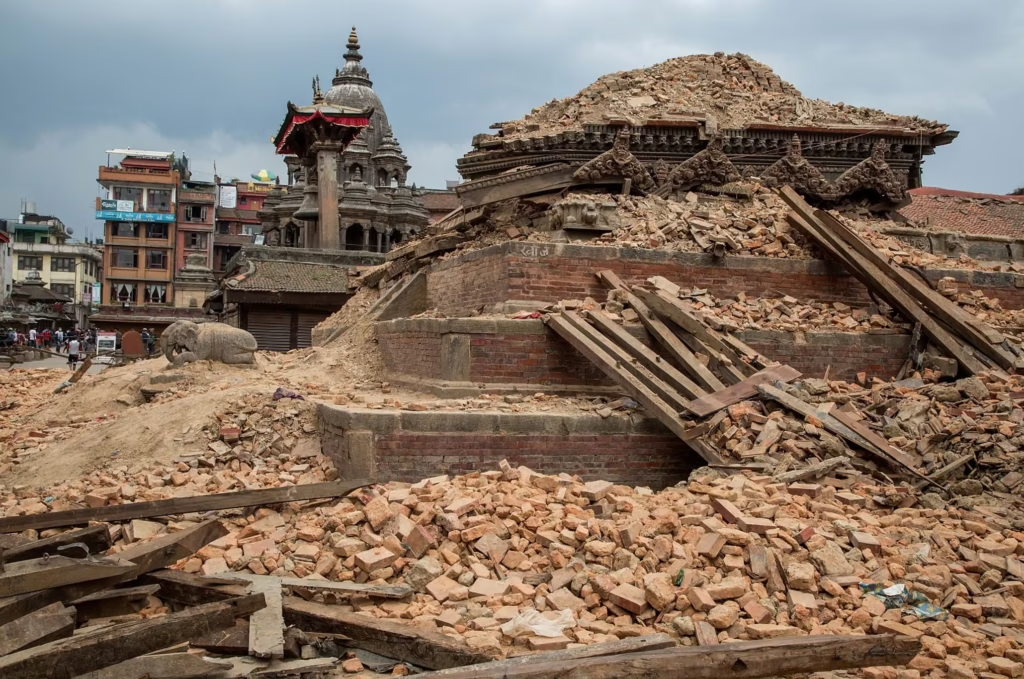
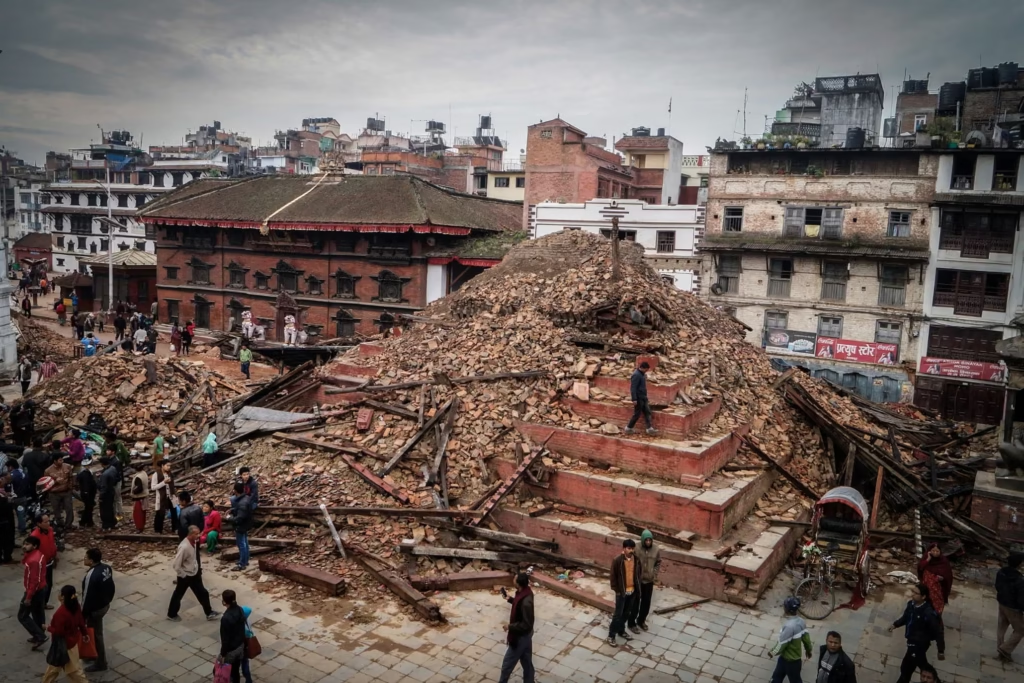
Local authorities, international organizations, and heritage experts have collaborated to restore the damaged structures. Traditional building techniques are being used to maintain authenticity. The process is meticulous and ongoing, ensuring that future generations can experience the square’s historical richness.
Engineering Techniques and Craftsmanship
One of the most compelling aspects of Kathmandu Durbar Square is its sophisticated engineering, particularly in response to seismic activity. Traditional construction methods demonstrate an intuitive understanding of earthquake resilience.
Structural Strategies
- Timber Reinforcement: Wooden beams integrated into brick walls to absorb seismic shocks
- Flexible Joinery: बिना nails using mortise-and-tenon joints, allowing controlled movement
- Tiered Roof Load Distribution: Reduces vertical stress and enhances stability
- Brick-Mud Mortar: Provides elasticity absent in rigid cement structures
Following the 2015 Gorkha earthquake, scholars like Rohit Jigyasu have emphasized that many traditional structures performed better than modern concrete buildings, reinforcing the value of indigenous engineering knowledge.
Artisanal Detail
The square is equally renowned for its craftsmanship, especially in wood carving and metalwork. Struts often depict deities and mythological scenes, serving both structural and symbolic functions. As Slusser observed, “no surface was left unarticulated,” reflecting a cultural ethos where ornamentation and spirituality are inseparable.
Things to Do in Kathmandu Durbar Square
A visit to Kathmandu Durbar Square offers a wide range of experiences, blending history, culture, and everyday life.
Explore the Museums
The palace complex houses several museums where visitors can learn about Nepal’s royal history, traditional weapons, and artistic heritage.
Observe Local Life
The square is a gathering place for locals. Watching daily activities, from vendors selling goods to people offering prayers, provides insight into Kathmandu’s vibrant culture.
Photography Opportunities
The intricate architecture, lively atmosphere, and cultural richness make Kathmandu Durbar Square a paradise for photographers.
Visit Local Shops and Cafes
Surrounding the square are numerous shops and cafes offering traditional handicrafts, souvenirs, and local cuisine.
Best Time to Visit
The ideal time to visit Kathmandu Durbar Square is during the spring (March to May) and autumn (September to November) seasons. These periods offer pleasant weather and clear skies, making sightseeing more enjoyable.
Visiting during festivals provides a more immersive cultural experience, though it can also mean larger crowds.
Entry Fees and Practical Information
Foreign tourists are required to pay an entry fee to access Kathmandu Durbar Square. The fees contribute to maintenance and restoration efforts.
- Carry your ticket as it may be checked within the square.
- Hire a local guide for deeper insights into history and culture.
- Respect cultural norms, especially in religious areas.
- Dress modestly when visiting temples.
Preservation and Responsible Tourism
Efforts to preserve Kathmandu Durbar Square are ongoing, with local authorities and international organizations working together to restore damaged structures and protect cultural heritage.
Visitors can contribute by respecting the site, avoiding littering, and supporting local businesses.
Suggested Tour Guide Itinerary
Visiting Kathmandu Durbar Square offers both an architectural journey and an immersion into Nepal’s living heritage. The best experience comes from approaching it slowly—on foot—allowing time to absorb the intricate details often missed at first glance.
Early morning visits reveal the square in a quieter state, with locals performing rituals and the soft light enhancing the textures of brick and wood. Hiring a knowledgeable local guide can significantly deepen understanding, especially regarding symbolic carvings and historical layers.
Key tips for visitors include:
- Allocate at least 2–3 hours to explore thoroughly
- Visit the Hanuman Dhoka Museum for historical context
- Observe restoration zones to understand post-earthquake reconstruction
- Respect religious spaces, particularly Kumari Ghar and active temples
Nearby areas like Asan Bazaar and Freak Street provide additional context, linking the royal square to the broader urban and commercial life of Kathmandu. Despite modern pressures, the square remains a powerful testament to Nepal’s architectural ingenuity and cultural continuity.
- Start early in the morning to avoid crowds and heat.
- Begin with Hanuman Dhoka Palace and museum exploration.
- Visit Kumari Ghar and wait for the goddess appearance.
- Explore nearby temples including Taleju Temple area.
- Take a break at a local café for traditional Nepali snacks.
- Spend time observing local life and photography.
- End your visit with shopping for handicrafts around the square.
Kathmandu Durbar Square is more than a historical site; it is a living testament to Nepal’s rich cultural heritage, artistic excellence, and spiritual traditions. From ancient palaces and temples to lively festivals and daily life, the square encapsulates the essence of Kathmandu.
Whether you are a history enthusiast, cultural explorer, or casual traveler, a visit to Kathmandu Durbar Square offers an unforgettable journey into the heart of Nepal.