Ancient Egyptian Architecture: Pyramids, Temples and Monumental Design
Ancient Egyptian architecture developed across distinct periods and places along the Nile. Royal tombs, temples and settlements answered different needs, yet their surviving remains show how builders worked with local stone, mudbrick, landscape and religious practice to shape enduring spaces.
From the stepped funerary complex at Saqqara to the pyramid fields of Giza and the temple landscape of Thebes, each site records a different chapter. The monuments are not one uniform style: they reflect changing patrons, beliefs, materials and building programs.
Saqqara and the beginnings of monumental stone building
The Step Pyramid of Djoser at Saqqara is widely recognized as Egypt’s earliest pyramid and an early large-scale stone monument. The complex is associated with the architect Imhotep and represents a major change from earlier mastaba forms. UNESCO includes Saqqara within the Memphis and its Necropolis World Heritage property.
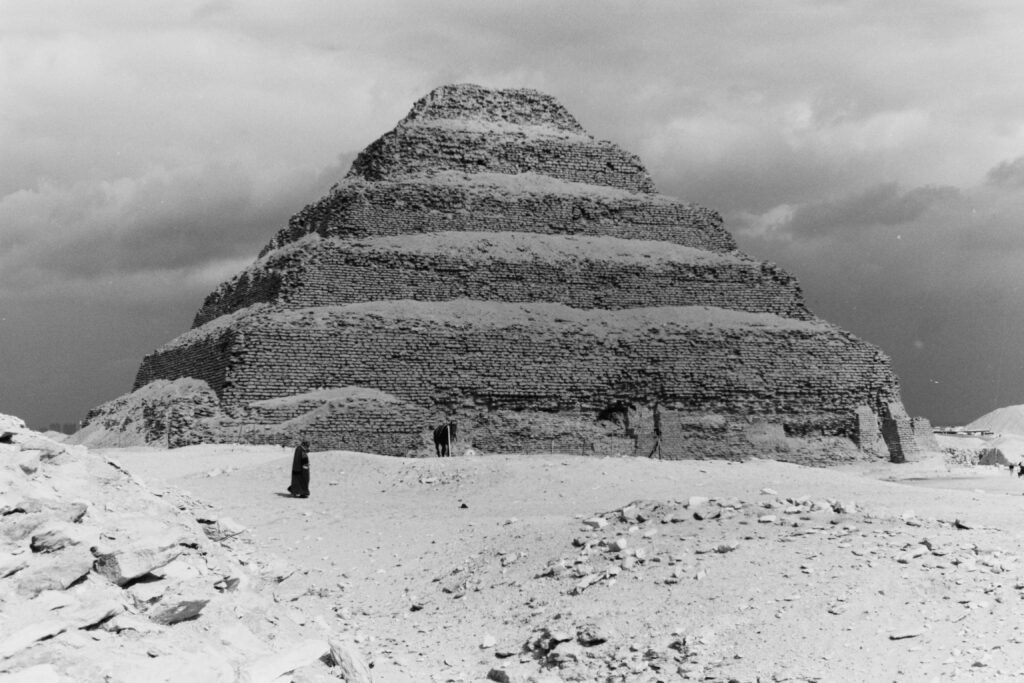
The Step Pyramid at Saqqara. Photograph by Dee Willi via Pexels. Image source.
Its tiered profile grew from a sequence of architectural experiments around the royal tomb. Rather than treating it only as an isolated pyramid, the surrounding enclosure and subsidiary structures should be read as part of a larger ceremonial complex.
Giza: scale, stone and royal funerary architecture
The pyramids of Giza belong to a later Old Kingdom building landscape. Egypt’s Ministry of Tourism and Antiquities identifies the Great Pyramid as the tomb of Khufu and gives its original height as 146.5 metres. The monument’s construction involved large-scale quarrying, transport and organization, while the precise sequence of methods remains a subject of research.
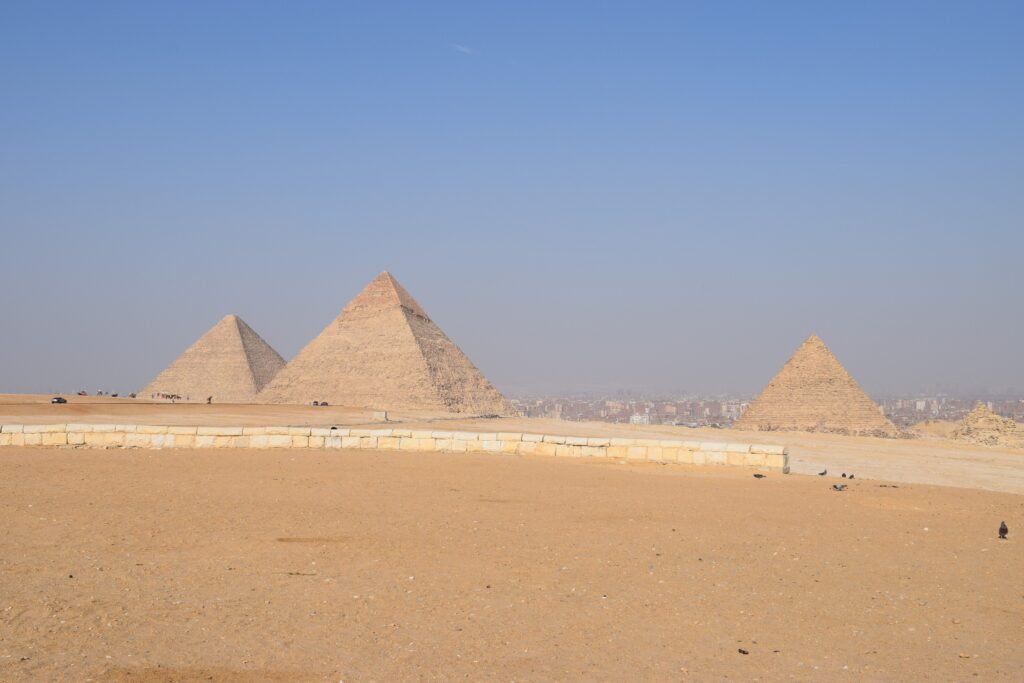
Pyramids of Giza. Photograph by Michelle Chadwick via Pexels. Photographer and image source.
At Giza, the pyramids, associated tombs and plateau setting form a broader funerary landscape. Their position and orientation, internal chambers and large stone volumes make the site important for understanding Old Kingdom planning and royal commemoration. UNESCO’s property description covers the pyramid fields from Giza to Dahshur.
Temples at Thebes: sequence, columns and ritual space
Karnak and Luxor formed part of the ancient religious landscape of Thebes. Their construction histories span multiple rulers and periods, so neither complex should be reduced to a single design moment. Courts, pylons, halls and sanctuaries organize movement through spaces with distinct ceremonial roles.
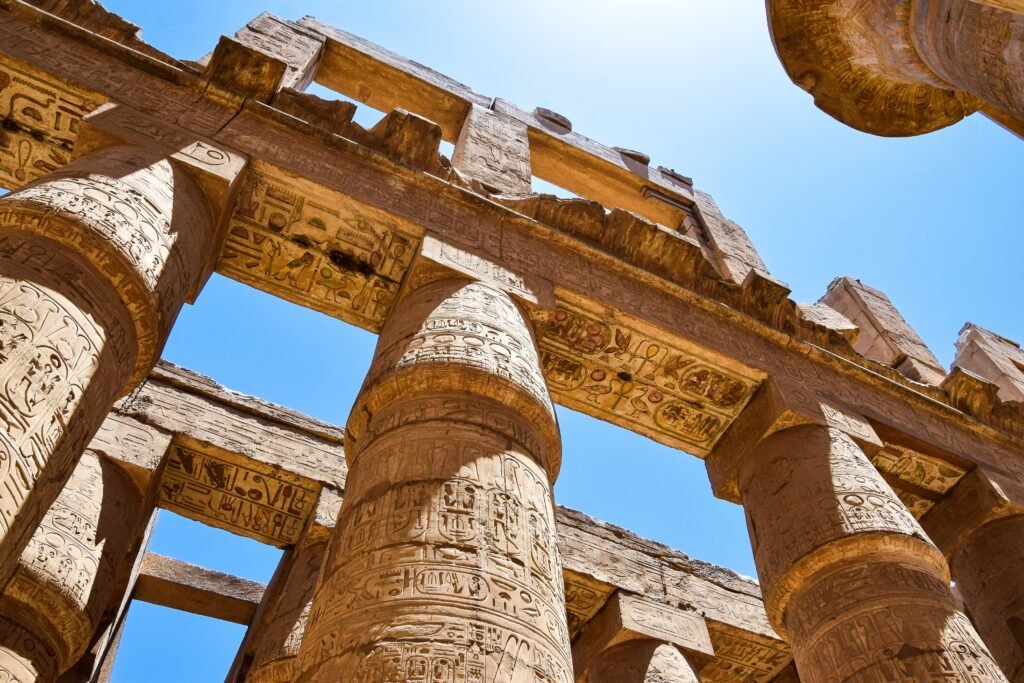
Carved columns at Karnak. Photograph by AXP Photography via Pexels. Photographer and image source.
UNESCO describes the Great Hypostyle Hall at Karnak as begun under Seti I and completed under Ramesses II, with 134 columns supporting its roof. The hall’s scale and changing column heights create a striking interior, while inscriptions and carved surfaces preserve evidence of royal and religious use.
Rock-cut architecture and the Nubian monuments
At Abu Simbel, rock-cut temples commissioned under Ramesses II were carved into the cliff face in Nubia. Their monumental façades and interior sequence show how architecture could be formed directly from the landscape. In the twentieth century, an international campaign relocated Abu Simbel and other Nubian monuments during the construction of the Aswan High Dam.
The relocation is also a modern conservation story: UNESCO records the international effort to safeguard monuments threatened by the rising reservoir. The site therefore connects ancient design with contemporary engineering, heritage policy and international cooperation.
Materials, construction and what remains uncertain
Builders used mudbrick extensively for everyday and administrative architecture, while limestone, sandstone and granite appear in major monuments according to location and purpose. The Egyptian Ministry’s account of the Great Pyramid notes the use of local limestone and casing stones from Tura. Nile transport helped connect regions, quarries and construction sites, but the exact logistics varied across projects.
It is important to separate evidence from speculation. Archaeologists have proposed different approaches for moving and raising heavy blocks; no single construction explanation accounts for every monument. The surviving buildings, quarry traces and written records offer evidence, but some details remain debated.
Why ancient Egyptian architecture still matters
These buildings remain influential because they unite structure, landscape, political authority and ritual in highly legible forms. Saqqara shows experimentation in royal funerary architecture; Giza demonstrates the scale of Old Kingdom monument building; Thebes preserves an evolving temple tradition; and Abu Simbel illustrates the relationship between carved architecture and terrain.
Read together, these sites reveal a changing architectural history rather than a single formula. Their preservation also depends on careful study and conservation, ensuring that future visitors can encounter the material evidence directly.