Megha-Structure, Blog #06
Hoover Dam
The Marvelous Megastructure
Hoover Dam stands as one of the most influential engineering achievements of the twentieth century. More than a massive concrete barrier across the Colorado River, it represents the convergence of architecture, structural engineering, political ambition, environmental transformation, and technological innovation. Constructed during one of the most challenging periods in American history, the dam permanently reshaped the American Southwest by controlling floods, providing irrigation water, generating hydroelectric power, and supporting the growth of modern cities.
Today, Hoover Dam remains a global case study for architects, civil engineers, historians, and infrastructure planners. Its remarkable combination of engineering efficiency and Art Deco architecture demonstrates that monumental infrastructure can serve both practical and cultural purposes.
Historical Genesis and Political Context
The origins of Hoover Dam date back to the early twentieth century when communities across the American Southwest struggled with the unpredictable nature of the Colorado River. Every year the river alternated between destructive flooding and prolonged drought, threatening settlements, agriculture, and regional development.
As western states expanded, controlling the river became increasingly important. The challenge was not simply technical—it involved political negotiations over water rights among seven basin states. These discussions ultimately resulted in the Boulder Canyon Project Act of 1928, which officially authorized construction.
Historian Donald C. Jackson, in Building the Ultimate Dam, describes Hoover Dam as “a convergence of necessity and national confidence,” illustrating how the project reflected America’s growing belief in large-scale infrastructure as a solution to national problems.
The beginning of the Great Depression dramatically increased the project’s importance. Construction started in 1931, creating thousands of desperately needed jobs while the nation’s economy struggled. When President Franklin D. Roosevelt dedicated the completed dam in 1935, he presented it as both an engineering masterpiece and a symbol of economic recovery.
Historical Highlights
- Authorized through the Boulder Canyon Project Act (1928)
- Construction began in 1931
- Officially dedicated in 1935
- Employed more than 20,000 workers
- Became one of the largest New Deal-era public works projects
- Helped stabilize regional economies through reliable water management
- Reduced flooding throughout the lower Colorado River basin
- Enabled large-scale irrigation throughout the Southwest
- Supported rapid urban development across Nevada, Arizona, and California
Why Hoover Dam Was Built
The dam was designed to solve several major regional challenges simultaneously.
Primary Objectives
- Flood control
- Water storage
- Agricultural irrigation
- Hydroelectric power generation
- Regional economic development
- Employment during the Great Depression
Without Hoover Dam, many of today’s largest southwestern cities—including Las Vegas, Los Angeles, and Phoenix—could never have expanded at their current scale.
Architectural Vision and Art Deco Design
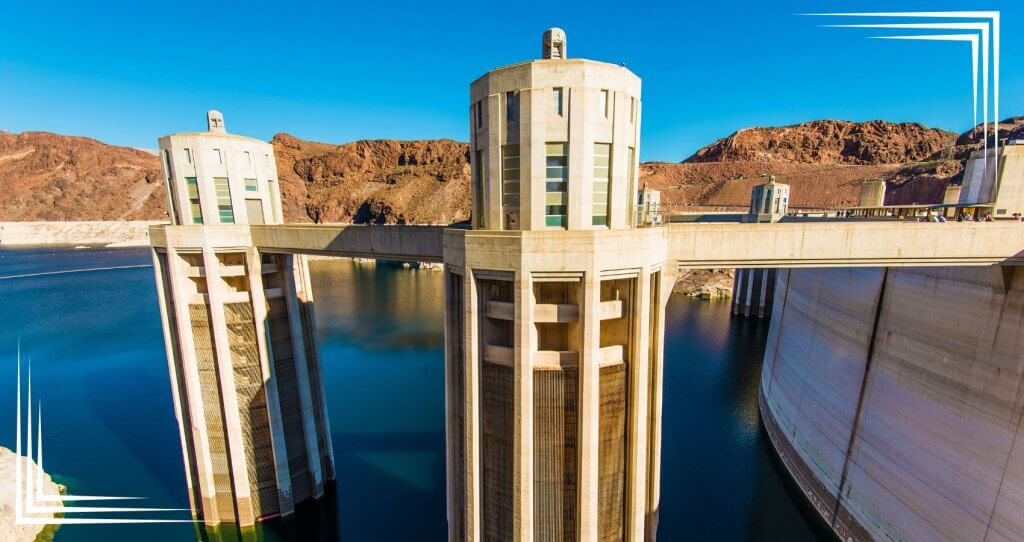
Although Hoover Dam is celebrated primarily as an engineering marvel, its architecture was carefully planned to express permanence, confidence, and national pride.
Architect Gordon B. Kaufmann rejected the idea that infrastructure should be purely utilitarian. Instead, he transformed the project into one of the world’s finest examples of Art Deco civic architecture.
The dam incorporates:
- Clean geometric forms
- Vertical emphasis
- Symmetrical composition
- Monumental proportions
- Decorative stone finishes
- Sculptural symbolism
These features reflect the optimism of the Machine Age, when technology represented progress and national achievement.
Interior Design
Artist Allen Tupper True designed interior decorative elements featuring Native American motifs, connecting the structure with the cultural heritage of the American Southwest.
Interior features include:
- Polished terrazzo flooring
- Decorative wall inlays
- Historic murals
- Symbolic geometric patterns
- Art Deco lighting
- Monumental public spaces
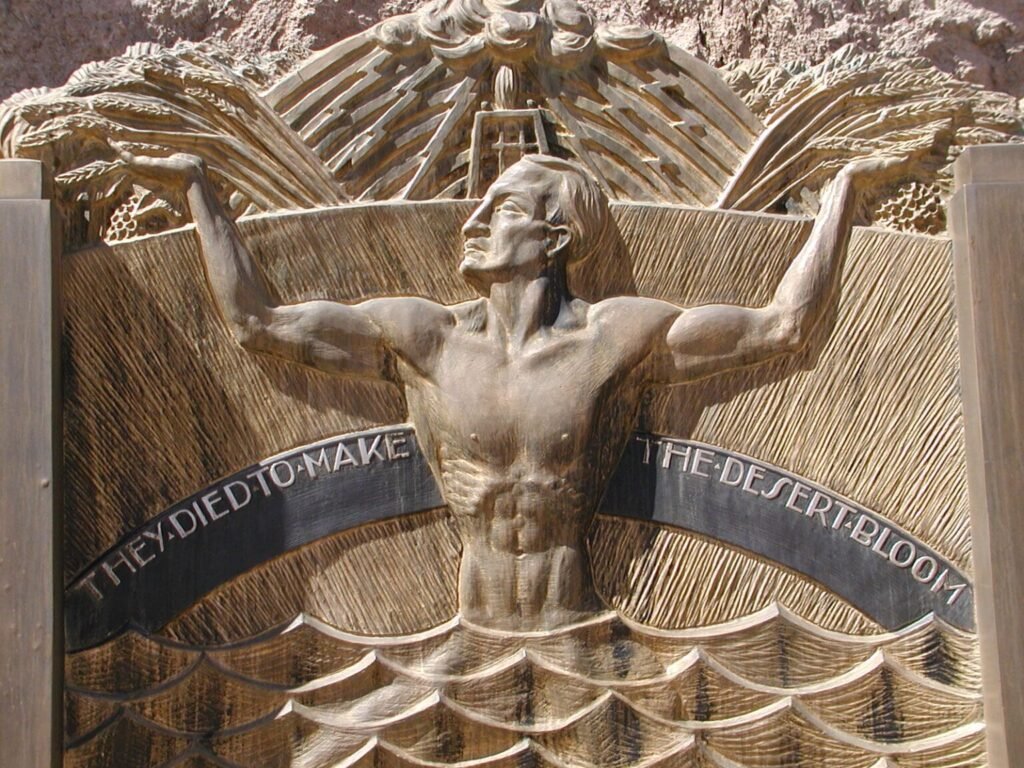
Monumental Sculpture
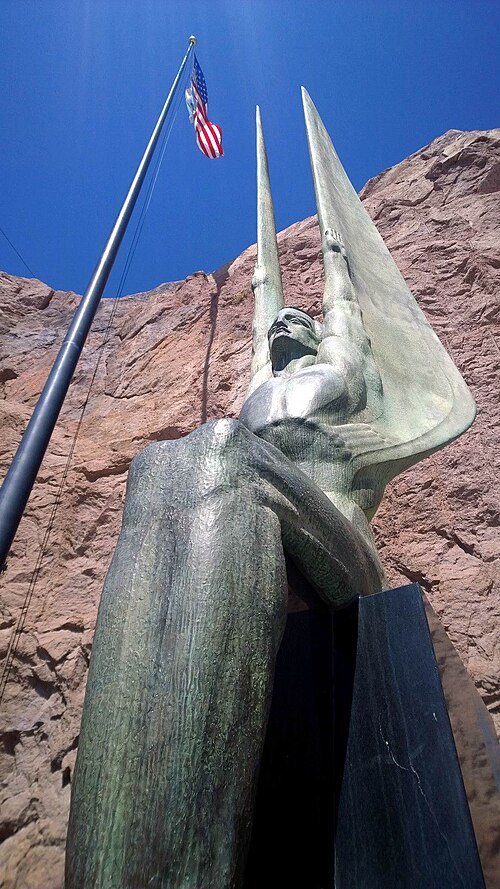
Near the Nevada elevator entrance stand the famous Winged Figures of the Republic, designed by sculptor Oskar J. W. Hansen.
These statues symbolize:
- Democracy
- Human achievement
- National strength
- Technological progress
The surrounding plaza also includes astronomical markings and inscriptions celebrating engineering and scientific advancement.
What Is an Arch-Gravity Dam?
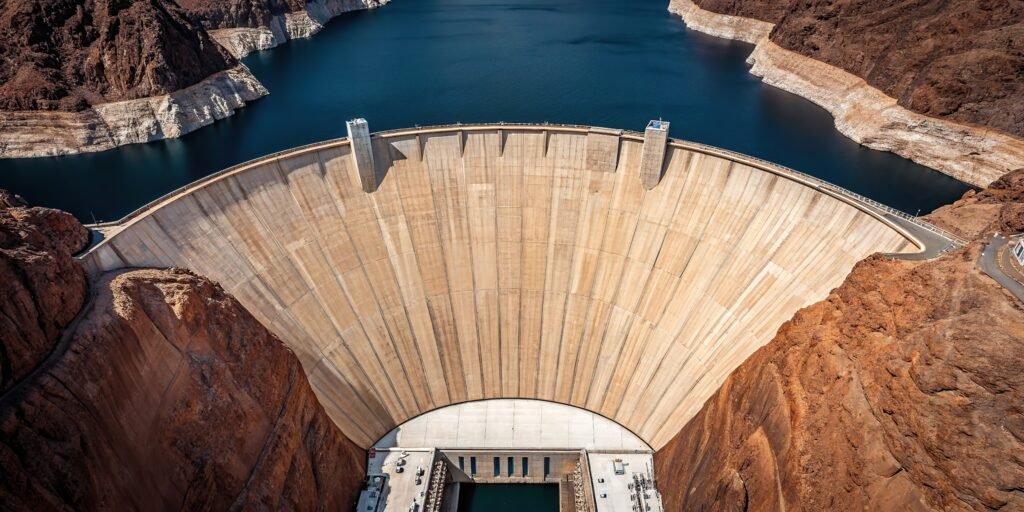
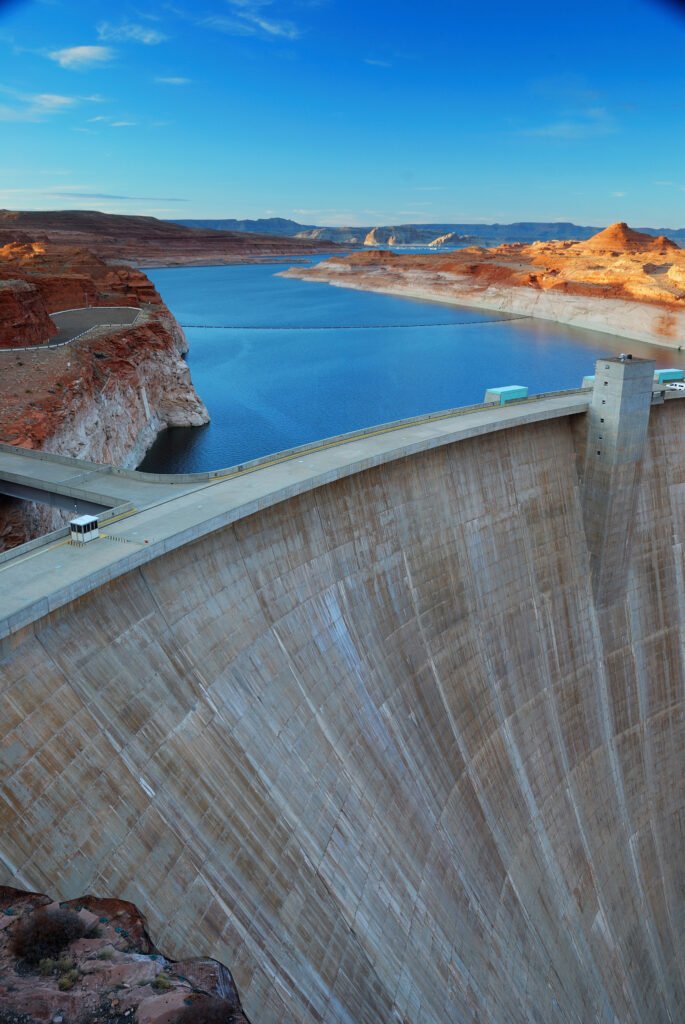
An arch dam uses its curved shape to redirect water pressure into the canyon walls.
Instead of resisting all the water force directly, the structure transforms much of the pressure into compressive forces, which concrete can withstand exceptionally well.
Unlike a straight concrete wall—which would develop tensile stresses and eventually crack under enormous pressure—the curved geometry allows the entire dam to shorten slightly under load, placing nearly all of the concrete in compression.
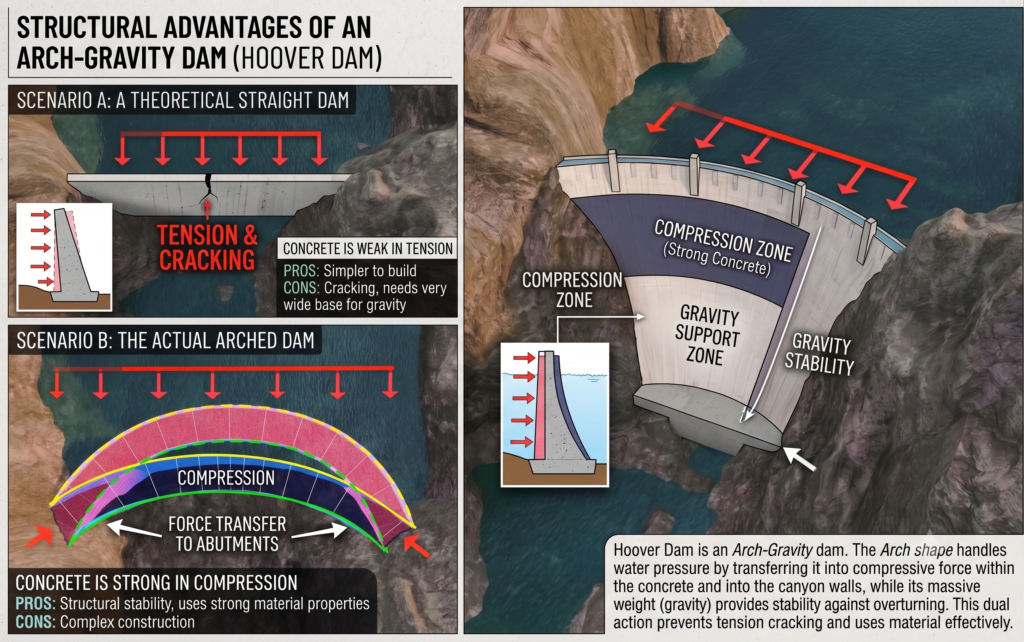
Concrete possesses tremendous compressive strength but relatively poor tensile strength. By keeping the structure almost entirely under compression, engineers eliminated the need for massive steel reinforcement.
The gravity component provides additional security.
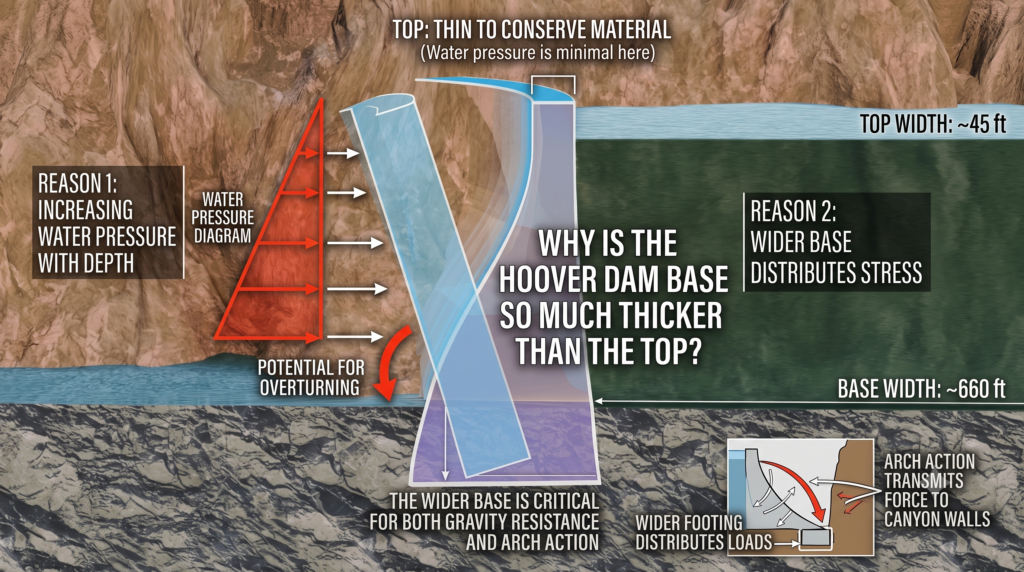
The dam becomes progressively thicker toward its base, lowering the center of gravity and allowing the enormous weight of the concrete itself to resist overturning.
This combination of:
- Curved arch action
- Massive gravity resistance
creates one of the most stable dam designs ever developed.
Structural Dimensions
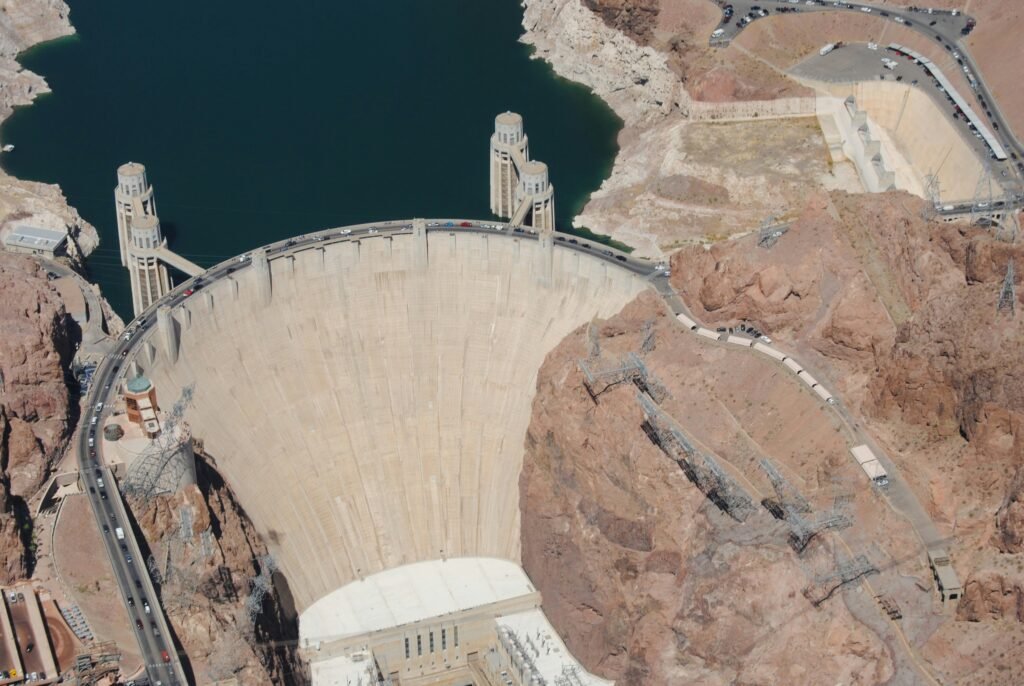
Hoover Dam remains one of the largest concrete structures ever built.
Specifications
- Height: 726 feet (221 m)
- Crest Length: 1,244 feet (379 m)
- Base Thickness: 660 feet (200 m)
- Top Thickness: 45 feet (14 m)
- Concrete Used: Over 3.25 million cubic yards
Every dimension was carefully calculated to balance:
- Water storage
- Material efficiency
- Structural stability
- Construction cost
- Long-term safety
As David P. Billington explains in The Tower and the Bridge, Hoover Dam represents “a marriage of scientific calculation and aesthetic clarity.”
Foundation Construction
Building such an enormous structure required an exceptionally stable foundation.
Engineers first removed all weathered and fractured rock from Black Canyon until they reached hard, competent bedrock.
The riverbed itself was excavated approximately 135 feet to establish a foundation capable of supporting millions of tons of concrete.
Additional stabilization included:
- Rock scaling
- Geological inspection
- Foundation grouting
- Precision excavation
Workers known as high-scalers climbed canyon walls to remove loose rocks before construction began, greatly improving long-term stability.
Diverting the Colorado River
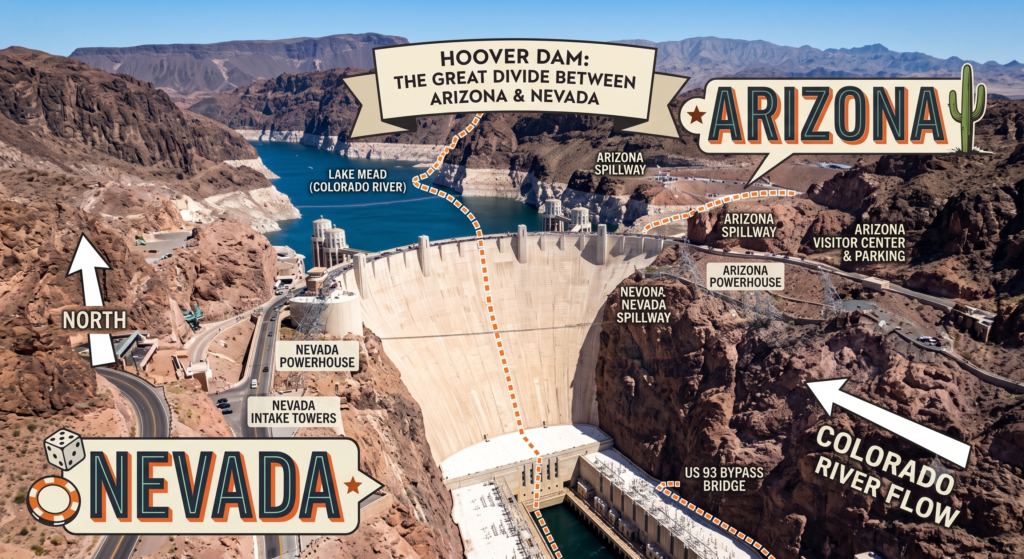
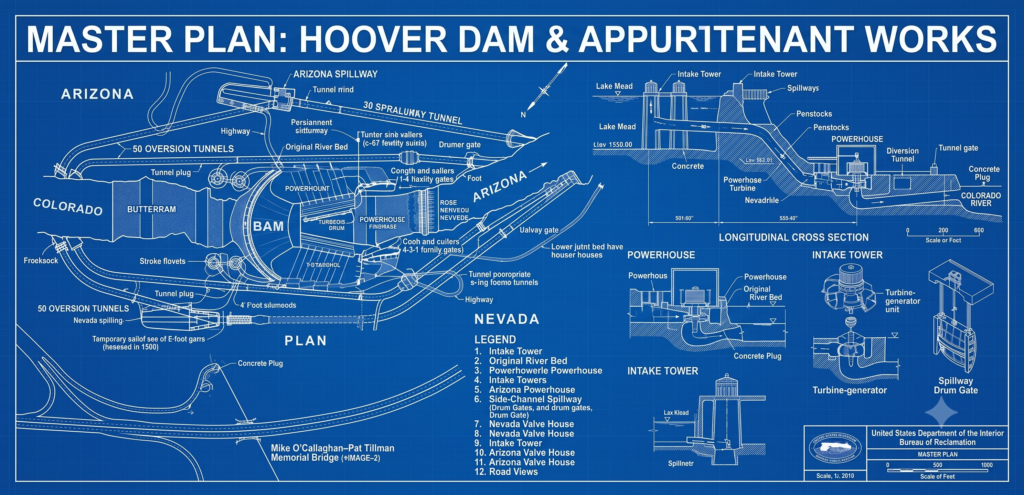
One of the greatest construction challenges involved keeping the construction site dry.
Engineers excavated four enormous diversion tunnels, each measuring approximately 56 feet in diameter, through the canyon walls.
These tunnels temporarily redirected the Colorado River around the construction zone.
This allowed workers to:
- Excavate foundations
- Build cofferdams
- Place concrete safely
- Maintain continuous construction
At the time, this represented one of the largest river diversion projects ever attempted.
Concrete Innovation: Why Hoover Dam Was Built in Blocks
Concrete generates tremendous heat while curing because cement reacts chemically with water.
If Hoover Dam had been poured as one continuous structure, the trapped heat would have remained inside the concrete for decades.
This prolonged heating would have caused:
- Thermal expansion
- Severe cracking
- Structural weakness
- Potential long-term failure
To solve this problem, engineers divided the dam into approximately 50 × 50-foot interlocking concrete blocks.
Cooling System
Each block contained embedded 2-inch steel pipes.
Cold water circulated continuously through these pipes to remove heat while the concrete cured.
This innovative system allowed:
- Faster cooling
- Even temperature distribution
- Reduced thermal cracking
- Safe curing
Once the concrete fully hardened, engineers filled the cooling pipes with grout cement slurry, permanently integrating them into the structure.
This cooling technique later became standard practice for many large concrete dams worldwide.
Precision Surveying and Construction Techniques
Constructing Hoover Dam required unprecedented levels of accuracy.
Engineering innovations included:
- Advanced surveying methods
- Curvature alignment systems
- Standardized construction procedures
- Massive logistics coordination
- Efficient material transportation
- Workforce organization
These methods established many of the management practices still used in today’s megaprojects.
Internal Gallery Tunnels
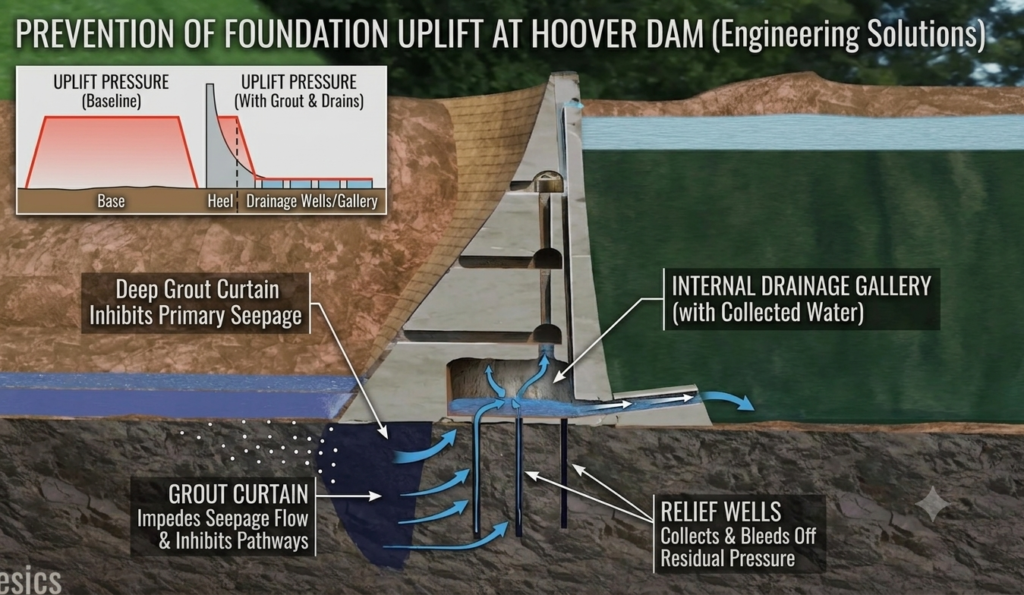
One of Hoover Dam’s lesser-known engineering features is its extensive internal gallery tunnel system.
These passageways perform several essential functions.
Managing Water Seepage
Water naturally attempts to pass beneath and through concrete under high pressure.
Gallery tunnels collect seepage water before it builds dangerous internal pressure.
Reducing Uplift Pressure
By draining water from beneath the dam, the galleries reduce uplift pressure acting against the foundation.
Lower uplift pressure significantly improves structural stability.
Inspection and Maintenance
The tunnels also allow engineers to inspect:
- Concrete condition
- Structural movement
- Leakage
- Instrumentation
- Cracks
These galleries continue to play an essential role in maintaining Hoover Dam today.
Spillways and Safety Systems
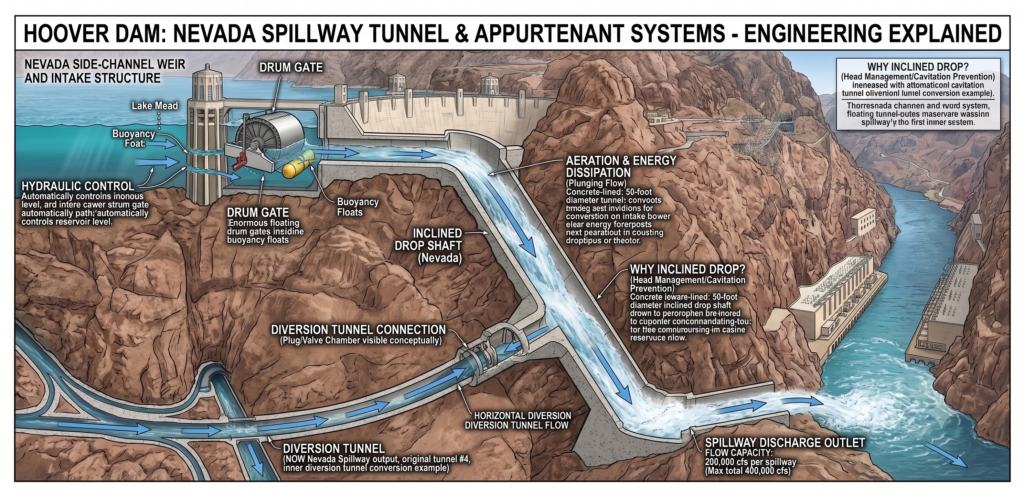
Hoover Dam incorporates several safety mechanisms designed to prevent catastrophic overflow.
Major systems include:
- Large spillways located approximately 27 feet below the crest
- Outlet works
- Controlled water release systems
- Internal drainage galleries
- Overflow management structures
These systems safely handle flood events while protecting the dam itself.
Hydroelectric Power Generation
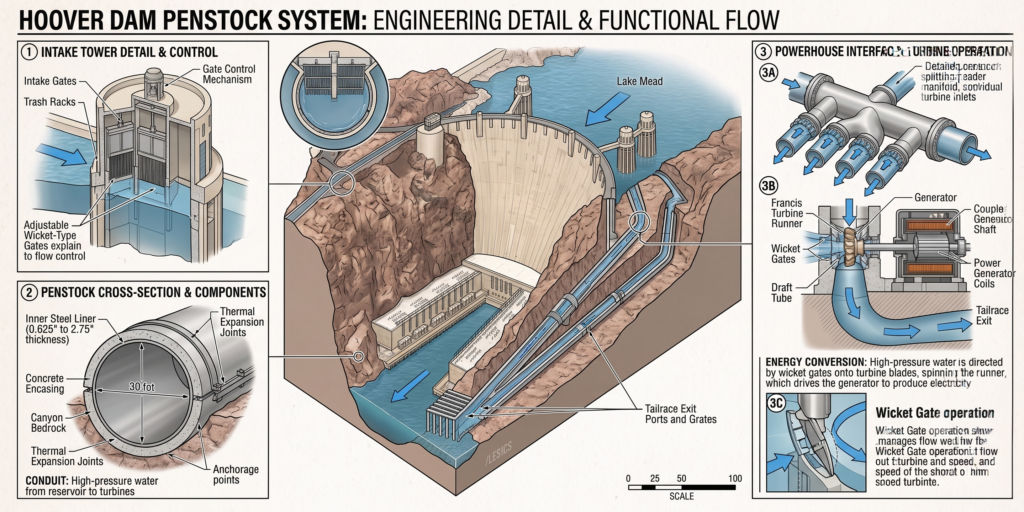
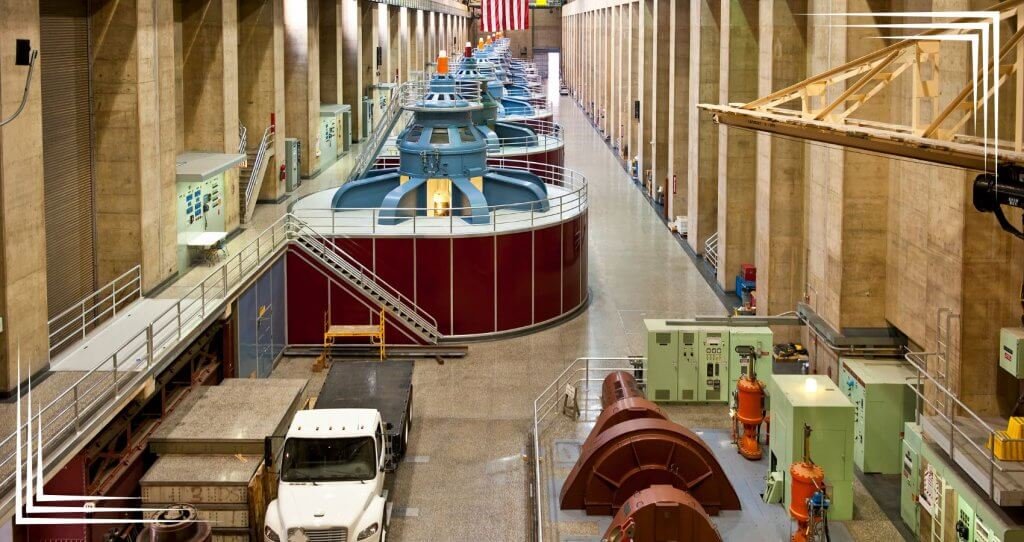
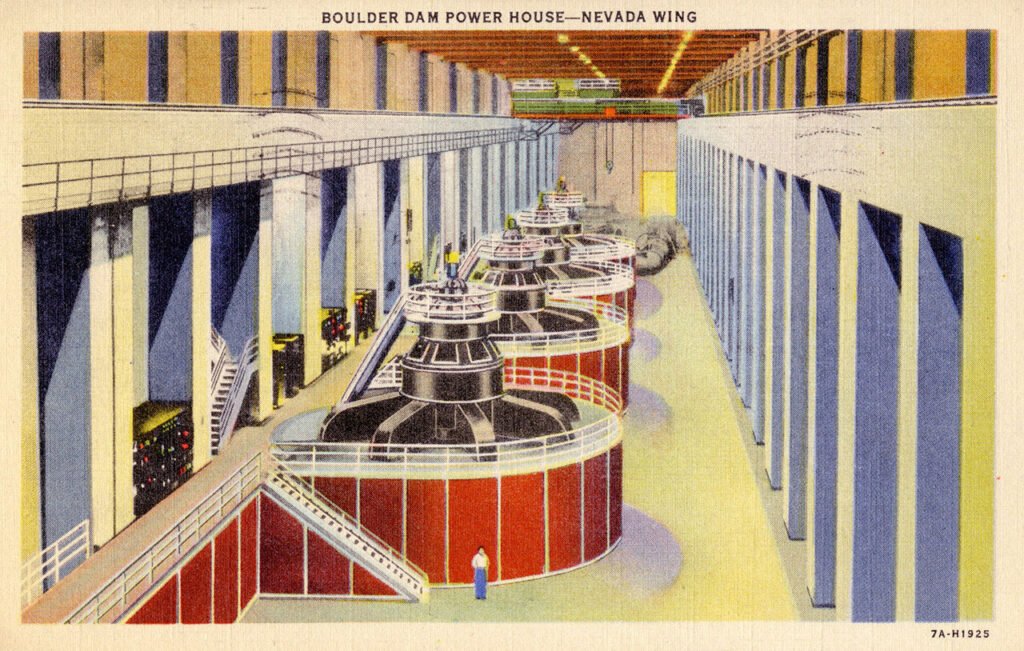
Hoover Dam quickly became one of the world’s largest hydroelectric power stations.
Water from Lake Mead travels through massive penstocks before striking Francis turbines, converting hydraulic energy into electricity.
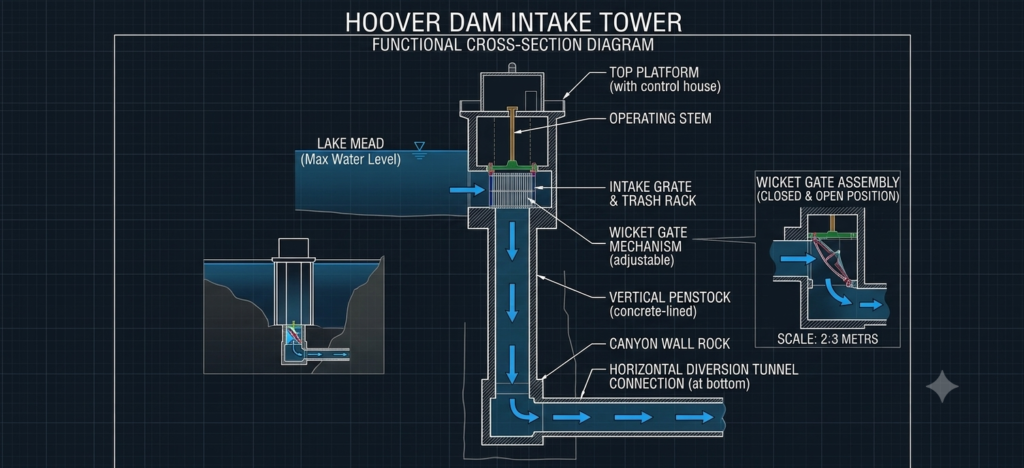
Power Generation Features
- Originally installed with 17 main turbines
- Uses Francis turbines optimized for high-head operation
- Supplies electricity throughout Nevada, Arizona, and California
- Integrated into regional transmission networks
Depending on modernization and operating conditions, the facility has historically generated between 1,300 MW and over 2,000 MW of electricity.
Continuous upgrades have improved efficiency while preserving the original engineering framework.
Water Management and Irrigation
Beyond electricity generation, Hoover Dam transformed western agriculture.
Its reservoir enables controlled water distribution across the Southwest.
Benefits include:
- Irrigation of over one million acres
- Reliable municipal water supply
- Reduced drought impacts
- Improved agricultural productivity
- Long-term water storage
This stability supported decades of regional economic growth.
Environmental Transformation
The completion of Hoover Dam fundamentally altered the Colorado River ecosystem.
Perhaps the most significant change was the creation of Lake Mead, which became the largest reservoir in the United States by volume.
Positive impacts included:
- Reliable water storage
- Recreation
- Hydropower
- Urban expansion
However, environmental consequences also emerged.
Ecological Effects
- Reduced downstream sediment transport
- Altered river habitats
- Changes in fish populations
- Modified river temperature
- Reduced natural flooding cycles
Environmental historian Donald Worster, in Rivers of Empire, argues that projects like Hoover Dam transformed rivers into instruments of economic policy rather than natural ecosystems.
Today, the dam continues to prompt discussions surrounding sustainable water management under changing climate conditions.
Cultural and Architectural Legacy
Hoover Dam influenced infrastructure projects worldwide.
Its legacy extends beyond engineering into architecture, planning, and public policy.
According to Henry Petroski in Engineers of Dreams, monumental infrastructure reflects cultural aspirations as much as technical capability.
The dam demonstrated that infrastructure could simultaneously achieve:
- Structural efficiency
- Architectural beauty
- National symbolism
- Public utility
- Long-term durability
Its Art Deco design inspired later civic buildings and infrastructure projects to integrate aesthetics with engineering.
Marc Reisner, in Cadillac Desert, famously observed:
“It was not merely a dam, but a declaration that nature itself could be engineered.”
Interesting Hoover Dam Facts
- One of the largest concrete structures ever constructed
- Built during the Great Depression
- Over 20,000 workers participated
- Uses an arch-gravity structural system
- Constructed with more than 3 million cubic yards of concrete
- Internal galleries allow continuous inspection
- Four massive diversion tunnels rerouted the Colorado River
- Created Lake Mead
- Continues supplying water and electricity nearly a century after completion
- Remains one of America’s greatest engineering landmarks
Travel Guide
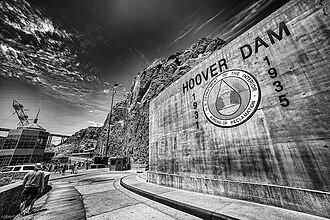
Visiting Hoover Dam offers an unforgettable opportunity to experience one of the world’s greatest engineering achievements firsthand.
Located approximately 30 miles (48 km) southeast of Las Vegas, the site is easily accessible by car and serves as one of the most popular attractions in the American Southwest.

Visitor Center
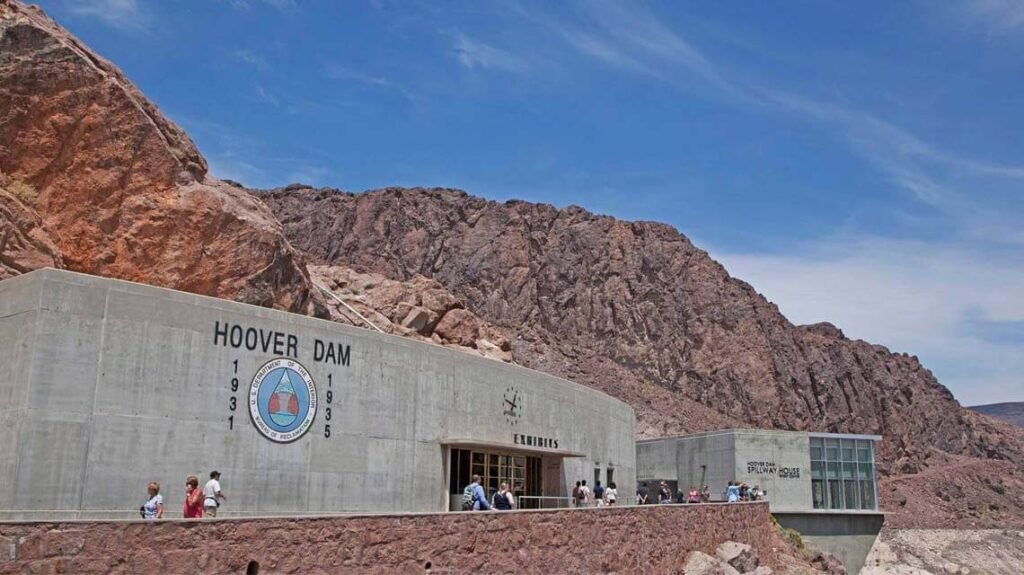
Begin your visit at the Hoover Dam Visitor Center, where exhibits explain:
- Construction history
- Engineering innovations
- Architectural design
- Hydropower systems
- Environmental impact
- Historical significance
Interactive displays provide an excellent introduction before exploring the dam itself.
Guided Tours
Guided tours provide access to areas unavailable through self-guided visits.
Highlights include:
- Generator rooms
- Original construction tunnels
- Interior gallery passages
- Power plant
- Engineering exhibits
These tours offer a close look at the remarkable construction techniques that made Hoover Dam possible.
Walking Across the Dam
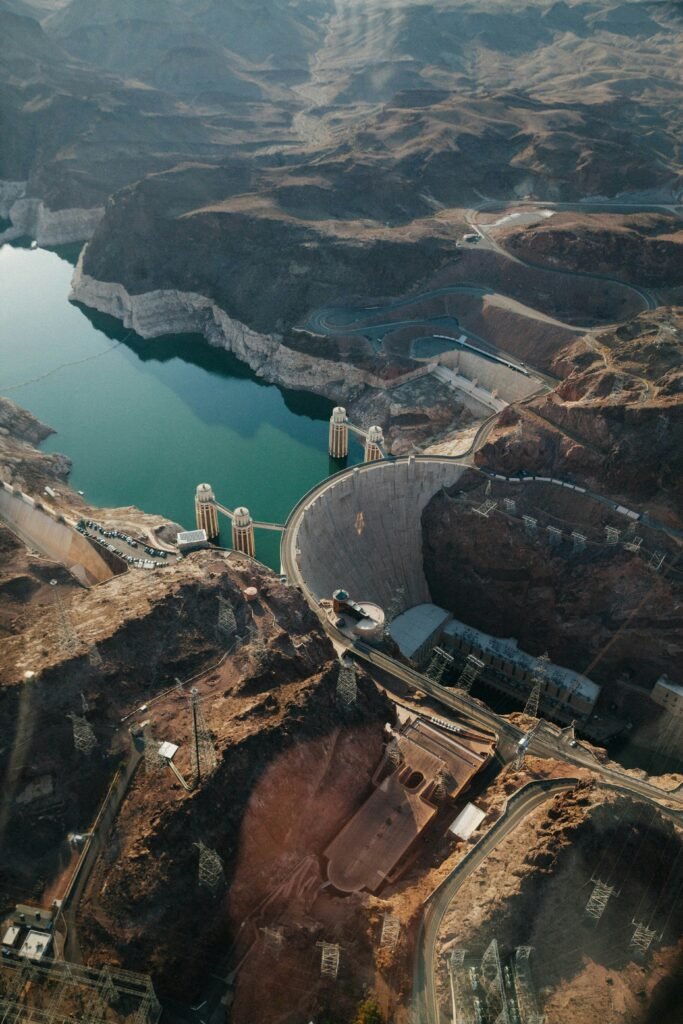
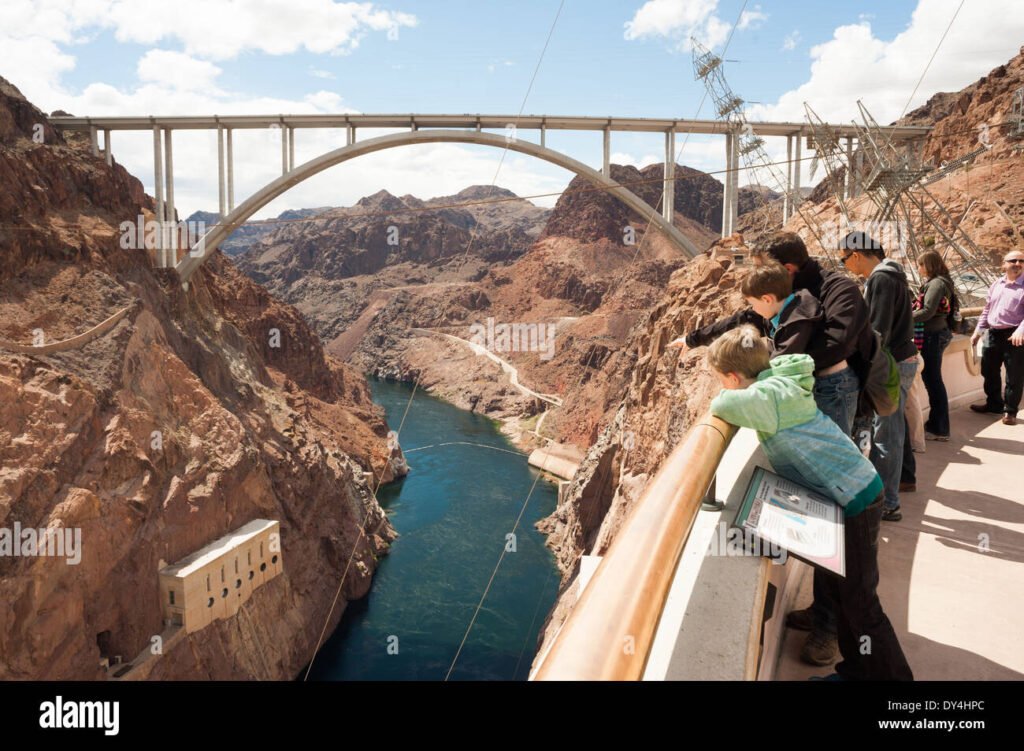
Walking along the crest provides spectacular panoramic views of:
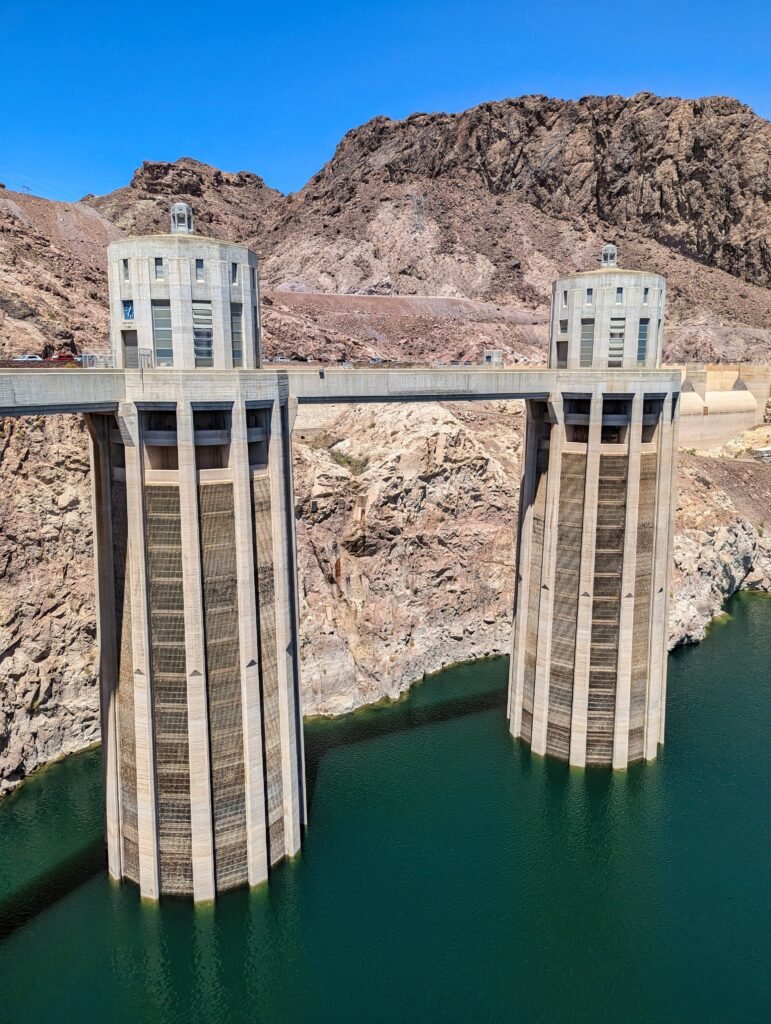
- Black Canyon
- Lake Mead
- Intake towers
- Spillways
- Colorado River
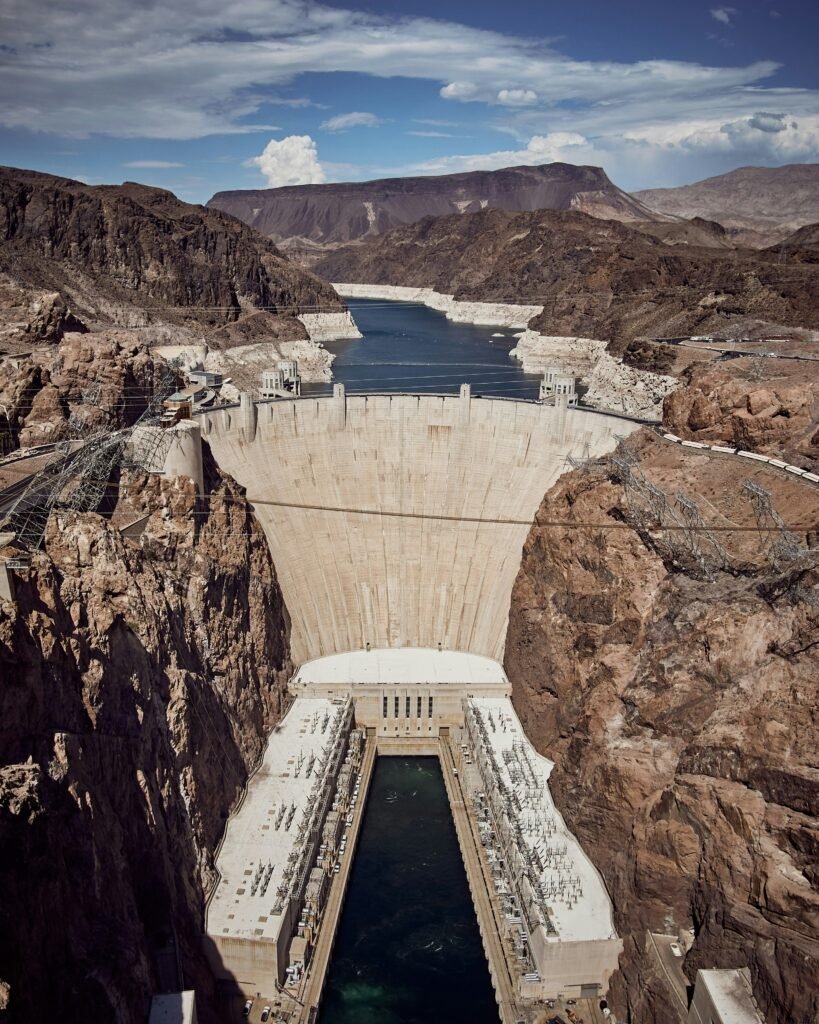
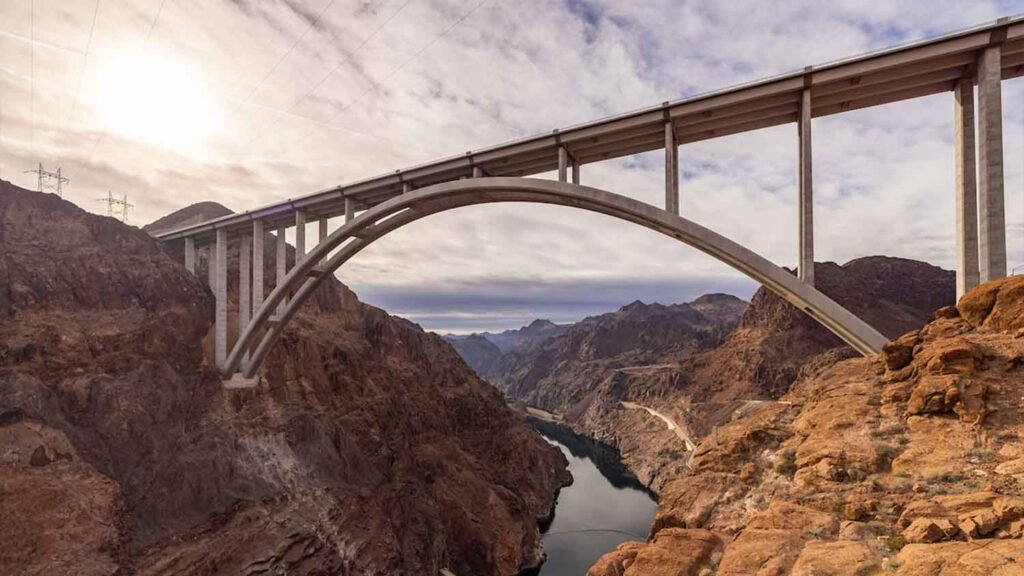
For even broader perspectives, visit the nearby Mike O’Callaghan–Pat Tillman Memorial Bridge, which overlooks the entire structure.
Nearby Attractions
Extend your visit by exploring:
- Lake Mead National Recreation Area
- Scenic desert viewpoints
- Hiking trails
- Boating opportunities
- Photography locations
Visitor Tips
- Allow 2–3 hours for a complete visit.
- Visit early morning or late afternoon to avoid extreme summer temperatures.
- Wear comfortable walking shoes.
- Bring water, sunscreen, and a hat during warmer months.
- Combine the trip with nearby recreational activities around Lake Mead.
The Final Take
Nearly a century after its completion, Hoover Dam remains one of humanity’s greatest demonstrations of engineering ambition, architectural excellence, and national vision. Its innovative arch-gravity design, pioneering concrete cooling system, sophisticated internal galleries, hydroelectric power generation, and Art Deco architectural detailing continue to inspire engineers and architects around the world.
Beyond its technical achievements, Hoover Dam permanently transformed the American Southwest—controlling floods, irrigating farmland, generating renewable energy, supporting millions of people, and creating Lake Mead. It also serves as a reminder that infrastructure can embody both scientific precision and artistic expression.
Whether studied as an engineering landmark, admired as an architectural masterpiece, or visited as one of America’s most iconic destinations, Hoover Dam remains a timeless symbol of human ingenuity and the enduring power of visionary design.